
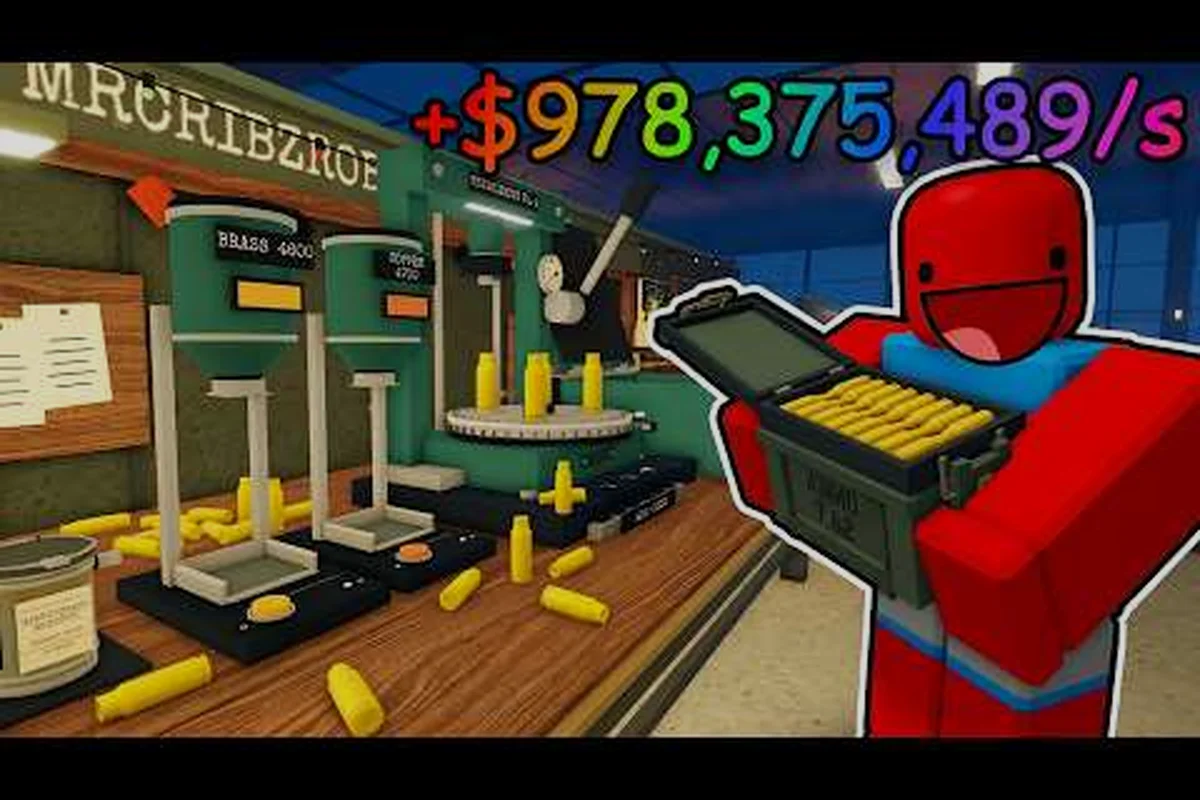
In BRASS HELL, hand crafting turns recovered materials into usable ammunition by keeping the press supplied and reducing dry stalls. A practical production loop starts by checking which brass, lead, and recovered components are available, then feeding them into the press before crafting begins so material shortages do not interrupt the workflow. Tracking inventory as you work helps prevent overproducing one item while another component runs low, creating a steadier flow of rounds for later crate loading.
Move Materials Into the Press Before the Stalls
The BRASS HELL hand crafting guide centers on one simple production goal: move materials into the press before the ammunition workflow stalls. Hand crafting matters because every useful round depends on a prepared chain of ingredients, tools, and output space. A tidy inventory is helpful, but steady material flow is the real advantage when you are managing ammunition by hand.
The game’s broader production loop is easy to understand once its stations are treated as connected steps rather than isolated menus. For a wider look at that structure, the BRASS HELL gameplay overview explains how activity and production fit together.
| Production element | Player action | Primary result | Common failure |
|---|---|---|---|
| Material intake | Recover or gather inputs | Usable crafting stock | Producing with no source |
| Hand preparation | Combine or process ingredients | Press-ready materials | Wrong material mix |
| Press operation | Run the crafting station | Finished rounds | Starved or blocked press |
| Output handling | Collect and move products | Available ammunition | Cluttered storage |
| Crate packing | Arrange finished rounds | Efficient shipment | Wasted crate capacity |
This BRASS HELL hands-on crafting approach treats the workflow as a checklist you can diagnose from left to right. If finished rounds stop appearing, check material intake first, then preparation, press status, output space, and storage. This ordered diagnosis is more reliable than repeatedly operating the press, especially after a long session leaves several stations out of sync.
Core Production Principles
A successful production setup keeps three conditions true at all times: the hand-crafting chain has raw inputs ready, the press can begin work without waiting for a fresh recovery run, and finished brass products are moved away from the work area. In practice, these conditions interact: a brief delay at the ammo or bullet crafting stage can leave an otherwise productive line idle, while a crowded output area can prevent the next batch from being completed. Monitoring these states lets you intervene early and keep the BRASS HELL production flow moving.
-
Input reserve: Keep enough raw material on hand to continue working without waiting for a fresh recovery run.
-
Prepared-material buffer: Maintain a small stack of processed inputs so temporary station delays do not stop the entire chain.
-
Output clearance: Remove or route finished products before they block the next crafting cycle.
Those principles are deliberately qualitative because exact quantities depend on your current unlocks, recipe availability, and progression state. Rather than inventing universal numbers, this guide focuses on observable states: an empty input stack, a waiting press, a crowded output area, or a crate with unused capacity. This BRASS HELL production guide remains useful because it tells you what those states mean and which action resolves them.
Preparing Materials for Reliable Hand Crafting
Preparation determines whether the press receives a valid material or sits idle. Begin by checking the recipes available in your current progression, then compare those recipes with the materials in storage. The crafting system reference can help organize ingredients, recipe choices, and early production priorities before you begin pressing.
Audit Your Inventory
Do not start by producing at random. Perform a quick inventory audit that separates raw materials, intermediate goods, finished rounds, and items that belong in crates. This is especially valuable after exploration, because recovered loot may include several categories at once.
| Inventory category | What to check | Action |
|---|---|---|
| Raw materials | Count and identify every crafting input | Reserve enough for the next batch |
| Intermediate goods | Determine whether they feed another recipe | Craft them before raw materials |
| Finished rounds | Group compatible ammunition by type | Move them toward crate packing |
| Excess materials | Identify duplicates or unused inputs | Hold them for the next production run |
Community production experience consistently emphasizes the value of one-step-ahead crafting: process the next intermediate item while the press is still handling the current batch. That habit reduces idle time because the next stage is ready when the machine finishes.
Confirm the Recipe Before Operating
Select the intended recipe and verify every required component before starting the press. If a component is missing, search your inventory for the closest matching item before replacing it. Items with similar names may serve different stages in the chain, and using the wrong one can leave the press without usable output.
Treat the checklist as a pre-production audit rather than a formality: verify the selected BRASS HELL recipe, required components, available quantities, and a clear destination for the finished ammunition before activating the press. A missing input can stop the chain, while a misidentified component may consume materials without producing usable output. For example, if a recipe requires a specific casing or component stack, confirm the exact inventory item and quantity rather than accepting a similar-looking substitute. Once the cycle begins, watch the station state to confirm that the intended inputs were consumed and the finished product appeared in the expected slot.
-
Check the recipe panel for the exact required inputs.
-
Confirm that each input is available in sufficient quantity.
-
Clear a slot for the finished product before starting.
-
Watch the station state after the first completed cycle.
-
Route finished ammunition to storage or crate preparation.
These checks also support anyone learning BRASS HELL crafting explained through actual production rather than memorizing a static recipe list. If the interface is unclear, pause after one cycle and inspect which counter rose, which inventory stack shrank, and where the finished item appeared. Those three observations explain the loop more clearly than any single menu.
Operating the Press and Making Ammo
The press is the point where prepared inputs become ammunition. Its usefulness depends on surrounding inventory, so the operation of the machine should be treated as part of a chain rather than a standalone animation. For broader station procedures and recipe organization, see the complete crafting guide.
Follow the Production Sequence
A dependable sequence is simple enough to repeat: prepare inputs, operate the press, collect the result, then start or resume the next cycle. Skipping the collection step may leave the output area full, while delaying preparation creates a gap between completed batches. Both situations reduce the effective output of the same station.
| Stage | Check before acting | Best practice |
|---|---|---|
| Input | Is the required material present? | Keep one prepared batch in reserve |
| Press | Is the machine idle and unobstructed? | Start as soon as inputs are ready |
| Output | Is there room for the product? | Clear old rounds first |
| Storage | Can finished ammo be moved? | Group by compatible crate type |
| Crate | Is enough space available? | Pack only accepted items |
BRASS HELL how to make ammo becomes easier when you watch for state changes rather than relying on a fixed rhythm. The press may be waiting for an ingredient, occupied by a cycle, or unable to deliver its result because the destination is crowded. Each state demands a different response.
Prevent Dry Presses
A dry press is a crafting cycle that cannot begin because one required ingredient is unavailable, even if the workshop still contains abundant raw materials. For example, a usable brass supply becomes irrelevant if the bullet recipe needs a specific casing or primer that has already been consumed or moved elsewhere. A missing input can therefore halt ammo production, interrupt the assembly of intermediate components, and force you to choose between gathering that ingredient or redirecting the available stock toward another recipe.
A dry press is best avoided by tracking each bullet recipe’s required inputs before starting a hand-crafting cycle. For example, if a brass-heavy recipe also needs primer or a specific casing type, having plenty of brass in storage does not solve the shortage; the missing component blocks the entire conversion into usable ammunition. Checking recipe prerequisites first can prevent unnecessary material processing and leave you with a workable combination for the next production run.
-
Never spend every piece of an intermediate material when the raw supply is already low.
-
Keep at least one usable input combination available for the next cycle.
-
Avoid filling storage with unprocessed materials while ammunition is running low.
-
Stop repeated presses when a missing ingredient is the only problem.
-
Recheck recipes after each major crafting unlock, because access can change what is worth producing.
The final point matters in BRASS HELL hands-on crafting. A previously ignored material may become valuable after a recipe unlock, while a low-demand item may now occupy space that ammunition needs. A periodic recipe review prevents old habits from creating unnecessary bottlenecks.
Managing Output, Storage, and Crate Capacity
Finished ammunition is useful only when it can be stored, moved, and eventually packed. Production slows when output becomes a storage problem, because players often spend more time rearranging inventory than maintaining the press. Good crate discipline turns raw output into organized shipments.
Create Dedicated Working Space
Reserve clear areas for three purposes: raw materials awaiting processing, ammunition awaiting packing, and crates awaiting completion. For example, keep casings, primers, and projectile materials in the preparation area; move completed rounds to the packing area; and stage accepted ammunition beside the crate rather than among unsorted inputs. This separation makes a dry input stack or a full ammunition group easier to spot, while keeping the hand-crafting loop from confusing unfinished production with completed goods.
| Workspace | Keep here | Avoid here |
|---|---|---|
| Preparation area | Raw and intermediate inputs | Mixed unrelated crafting drops |
| Finished-goods area | Completed ammunition | Raw materials that block sorting |
| Packing area | Rounds ready for crates | Products already packed or irrelevant items |
| Reserve storage | Materials for future cycles | Items competing for critical space |
The crate and loading guide expands on the final step, including how accepted ammunition and crate organization affect the shipment stage. Keeping those topics separate makes the production loop easier to diagnose because you know whether a problem started at the press or at packing.
Match Rounds to Crates
Sort compatible rounds before opening a crate, rather than placing items one at a time and testing their fit. Grouping reduces wasted movement and helps you identify ammunition types that cannot share the same container. It also prevents a partially packed crate from being left open while the rest of the ammunition waits elsewhere.
For BRASS HELL how to make bullets planning, think in batches rather than isolated pieces. Produce one usable group, move it into the finished-goods area, and begin the next group while the first remains sorted. This rhythm is more sustainable than crafting a large mixed pile and sorting everything afterward.
Use a Simple Production Checklist
At the end of each short work session, check these five points: confirm that the BRASS HELL press can continue receiving material, verify that the next required input is ready, group finished rounds before storage, stage suitable crates in the packing area, and keep reserve materials separate from completed ammunition. For example, if a session ends with brass cases awaiting processing, leave the cases beside the next input batch but keep them distinct from finished rounds; this prevents the starved input and mixed storage failure modes without delaying the press.
-
The press is not blocked by an uncollected product.
-
The next required input is prepared.
-
Finished rounds are grouped rather than scattered.
-
The packing area has suitable crates available.
-
Reserve materials are separated from items ready to ship.
This checklist is short enough to use consistently after every short BRASS HELL work session while still catching the four common failure modes: starved input, blocked output, mixed storage, and half-packed crates. For example, if a session ends with brass cases awaiting processing, leave those cases beside the next input batch but physically separate them from finished rounds; likewise, stage an empty crate before opening a new supply box so completed BRASS HELL rounds do not block the press or force a mixed-storage cleanup later.
Troubleshooting Common Crafting Problems
Most production problems can be identified by observing where the chain stopped. Start at the first missing stage, because repairing a downstream station while its upstream dependency is absent will not restore flow. Player reports commonly frame troubleshooting around the same physical cause-and-effect checks.
Diagnose by Symptom
| Symptom | Likely cause | Corrective action |
|---|---|---|
| Press remains idle | Missing or misplaced ingredient | Check the exact recipe inputs |
| Crafting starts but stops | Insufficient input quantity | Reserve resources and complete the recipe |
| Finished output cannot be collected | Output destination blocked | Clear or relocate stored products |
| Materials accumulate, ammunition does not | Preparation stage is skipped | Process intermediate items first |
| Crates have unused space | Rounds are mixed or left unsorted | Group compatible ammunition first |
| Production slows after exploration | Inventory was reorganized poorly | Reestablish dedicated working areas |
Reset a Broken Chain
When multiple stations seem involved, reset the sequence methodically. Clear the press output, prepare the required inputs again, confirm the recipe, and run one clean cycle. If that cycle succeeds, repeat the sequence and restore the buffer. If it fails, inspect the first stage that did not change, which is more informative than repeatedly pressing every button.
| Reset order | Action | Reason |
|---|---|---|
| 1 | Collect or clear output | Removes a possible blockage |
| 2 | Verify recipe inputs | Restores material accuracy |
| 3 | Prepare missing ingredients | Reconnects the recipe chain |
| 4 | Run one test cycle | Confirms the workflow |
| 5 | Rebuild the buffer | Restores continuous production |
This approach is central to BRASS HELL crafting explained through cause and effect. If a batch works after the reset, the problem was likely workflow state rather than a permanently broken recipe. If it does not, revisit progression and available inputs before changing unrelated parts of the workshop.
Building an Efficient Long Production Session
Efficiency is not only about maximizing one press cycle. It is about reducing the amount of attention required per completed round. A strong session alternates between active crafting and simple maintenance so the production chain keeps moving without constant menu corrections.
Choose a Production Focus
Select one ammunition type or recipe family for the current session. Mixing several outputs makes inventory harder to read and can leave several half-finished groups. Once the primary target is complete, sorting it and moving on to the next target is cleaner than interrupting production halfway through each craft.
A useful session structure is to treat one ammunition recipe as a self-contained production block: set a target count, identify the press output and required inputs, and decide the point at which the batch should be split into compatible storage groups. For example, if the chosen recipe is producing 40 rounds, completing that quota before switching to a different caliber prevents partially filled material stacks and makes the remaining ammunition easier to reserve for a later hand-crafting session.
-
Audit materials and current ammunition.
-
Prepare one buffer batch of inputs.
-
Operate the press and collect output.
-
Repeat until the primary ammunition target is met.
-
Sort rounds into compatible crate groups.
-
Reserve remaining materials for the next session.
This also complements the broader production loop overview, which connects workshop activity to the game’s larger idle progression. The hand-crafting layer becomes easier when your storage decisions support those longer sessions instead of forcing constant reshuffling.
Monitor Pressure Points
Watch three pressure points during production rather than relying on a fixed timer: input depth, finished-output volume, and crate space. For example, if the raw-material stack begins shrinking faster while the finished ammunition pile grows, pause lower-priority recipes and collect the completed rounds before storage becomes the bottleneck. The linked table also tracks attention load, since frequent menu corrections are a practical warning that the active recipe mix has become too complex to manage efficiently.
-
Input depth: A steadily shrinking raw-material stack signals that replenishment is approaching.
-
Finished-output volume: A growing ammunition pile indicates that collection and sorting are falling behind.
-
Crate space: Limited compatible containers can stop a productive run even when the press is working perfectly.
| Pressure point | Early warning | Best response |
|---|---|---|
| Input depth | Material stack declines rapidly | Stop low-priority crafting |
| Output volume | Finished goods crowd storage | Collect and group rounds |
| Crate space | Compatible space disappears | Prepare and load eligible crates |
| Attention load | Frequent menu corrections | Simplify the current recipe mix |
A reliable BRASS HELL production guide therefore uses thresholds based on visible conditions rather than rigid timers. The moment one resource becomes scarce, reduce or redirect the workflow before the shortage becomes a complete stoppage. This habit preserves progress and makes the active session easier to follow.
Frequently Asked Questions
What is the best way to organize BRASS HELL hand crafting?
Organize materials into four groups: raw inputs, prepared intermediates, finished ammunition, and crate-ready rounds. Keep enough input for the next cycle, clear finished output promptly, and reserve one prepared batch when possible. This structure reduces idle presses and makes missing materials easier to diagnose.
How do I stop the press from running dry?
Watch both raw materials and prepared inputs, because an empty press may be waiting for either stage. Keep a small reserve of the required ingredients, avoid spending every intermediate component, and inspect the recipe before operating. When supplies dip, switch to gathering or process the next material batch.
Should all ammunition be crafted before filling crates?
No. A steady batch rhythm is more efficient than creating one oversized mixed pile. Produce usable groups, collect them, and sort compatible rounds into the packing area. This lowers inventory clutter and ensures partially completed crates are dealt with before valuable output is displaced by unrelated drops.
What should I check when production suddenly stops?
Begin with the press output, then verify the exact recipe inputs and available inventory. A finished item may be blocking collection, or a required ingredient may have been consumed by another task. Run one clean test cycle after clearing the output and correcting the material shortage.
Is BRASS HELL hands-on crafting necessary for progression?
A structured hand-crafting routine makes progression more dependable because ammunition production stays connected to your wider production loop. You do not need to optimize every click; you do need to prevent dry presses, maintain material reserves, and keep finished rounds moving toward storage and crates.