
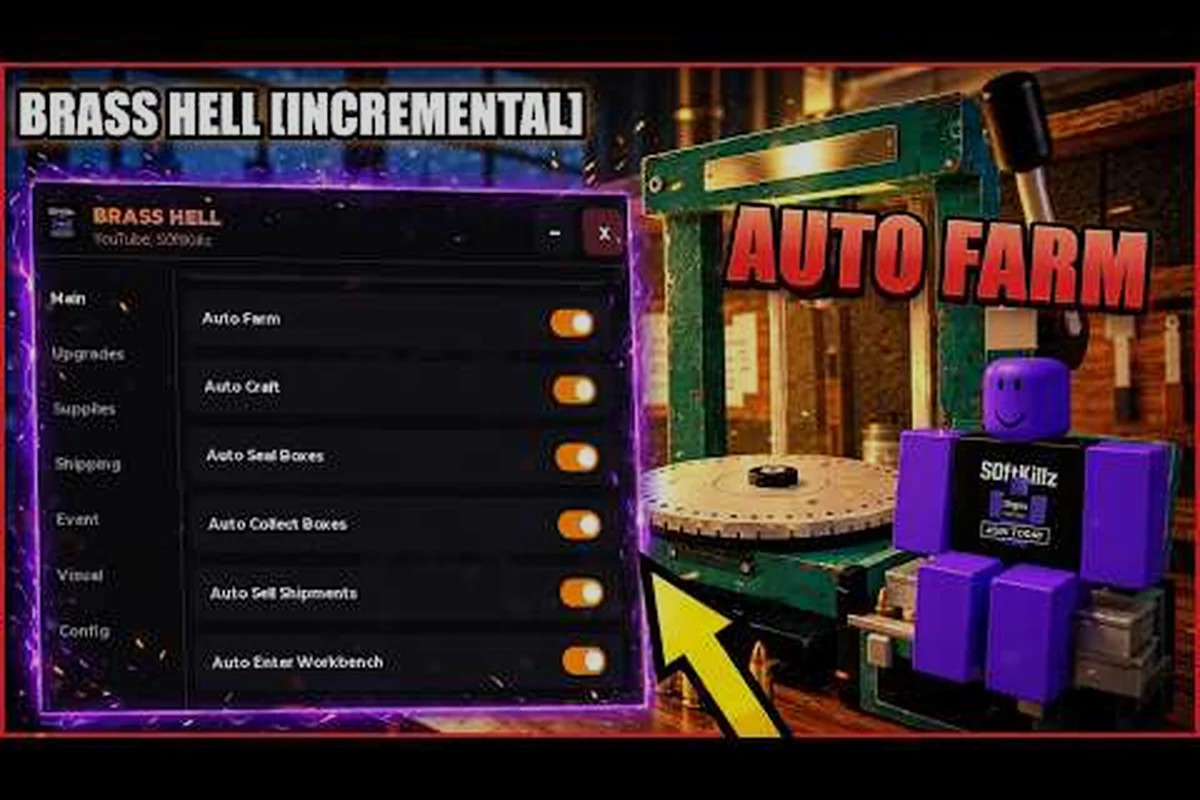
The BRASS HELL player count stands at 5,740 players online, compared with 829,582 lifetime visits. That snapshot suggests an active community beyond the cumulative browsing total, while the game’s four-player servers create a comparatively tight multiplayer format: team-based encounters require coordination among a small group rather than accommodating large-scale matchmaking. The current and lifetime figures capture different aspects of reach, making player-count and visit-tracking data useful when evaluating BRASS HELL active players and its overall player stats.
BRASS HELL Player Count Snapshot and Key Figures
The latest BRASS HELL player count snapshot records 5,740 concurrent players alongside 829,582 lifetime visits. Those numbers describe different stages of engagement: concurrent players represent people connected during the measured period, while lifetime visits accumulate every recorded visit over the game’s history.
That distinction matters because a game can accumulate a large historical audience without maintaining the same number of simultaneous participants. For a better view of popularity metrics, including visit and favorite totals, see our BRASS HELL popularity statistics analysis.
| BRASS HELL player statistic | Reported figure | What it represents |
|---|---|---|
| Players online | 5,740 | Concurrent participation in the measured snapshot |
| Lifetime visits | 829,582 | Cumulative visits recorded over the game’s history |
| Maximum players per server | 4 | Capacity of a full multiplayer session |
| Server groupings at peak | 1,435 | 5,740 players divided into four-player groups |
The server capacity is especially informative. If every concurrent player occupied a full four-person server, 5,740 players would fill 1,435 servers. In practice, the actual number of occupied servers would be higher because many groups contain fewer than four participants.
BRASS HELL Players Online and Server Capacity
The figure of 5,740 players online is best treated as a point-in-time snapshot rather than a permanent total. Player populations rise and fall throughout the day, and the number can change as squads form, sessions end, new players join, and groups return for another run.
Knowing how many players can join one session is a separate question from knowing the total audience. BRASS HELL supports up to four players per server, which gives squads enough flexibility for solo play, pairs, and small groups without creating large-server coordination problems.
| Group format | Players per session | Likely server use | Practical implication |
|---|---|---|---|
| Solo session | 1 | 25% occupied | Players can begin without waiting for partners |
| Duo session | 2 | 50% occupied | Two-player groups retain a manageable pace |
| Trio session | 3 | 75% occupied | Teams coordinate around three active roles |
| Full squad | 4 | Fully occupied | Maximum team size and strongest coordination |
Because BRASS HELL active players may be spread across many partially filled sessions, total headcount and server count should not be treated as interchangeable. A community with 5,740 online players might occupy substantially more than 1,435 servers if most groups are smaller than the four-player maximum.
To place this snapshot alongside daily and monthly behavior, our BRASS HELL daily player trends overview explains why time-of-day patterns can influence online counts more than lifetime totals. For example, a peak reading of 5,740 BRASS HELL players online may briefly coincide with squad formations before missions begin, while the count drops as players complete runs or leave for other games. Comparing the same daily measurement window across several dates is therefore more useful for assessing BRASS HELL active players than adding one high reading to BRASS HELL lifetime visits, which accumulate across every historical session.
BRASS HELL Player Stats: Interpreting the Numbers
The BRASS HELL player stats supplied for this snapshot include three useful but nonidentical signals: concurrent participation, cumulative visitation, and session capacity. Reading them separately prevents the common mistake of presenting every platform metric as a direct measure of current popularity.
5,740 concurrent players indicate present activity at the time represented by the source. 829,582 lifetime visits provide historical scale, although visits may include repeat attendance and should not automatically be interpreted as 829,582 unique people. The four-player server limit describes how that audience is distributed during multiplayer sessions.
| Interpretation | Strongest supporting metric | Reasonable conclusion | Caution |
|---|---|---|---|
| Current reach | 5,740 players online | A substantial audience was connected during the snapshot | The number can change quickly |
| Historical reach | 829,582 lifetime visits | The platform has recorded substantial cumulative traffic | Visits do not equal unique players |
| Session density | Four players per server | Small squads are the standard multiplayer format | The snapshot does not reveal every active server |
| Group sizing | Player count and capacity | Many sessions may be partially occupied | Average squad size would require extra data |
Community reports should be treated as snapshots rather than permanent truths. That is especially relevant for BRASS HELL player statistics, because online activity can shift after updates, events, weekend schedules, or changes in player discovery. A figure remains useful because it establishes a dated baseline against which later activity can be compared.
BRASS HELL Total Visits and Community Activity
The reported BRASS HELL total visits of 829,582 show the cumulative scale of recorded engagement. That figure is much larger than the concurrent audience, illustrating why lifetime metrics and live metrics answer different questions. One measures accumulated traffic, while the other reflects participation at a particular moment.
A useful way to interpret the data is to divide lifetime visits by the concurrent snapshot. The ratio is approximately 145 visits for every player in the 5,740-player online count. This is not a retention rate, because visits and players are different units and the periods do not match.
| Derived comparison | Calculation | Result | Valid interpretation |
|---|---|---|---|
| Lifetime visits per concurrent player | 829,582 ÷ 5,740 | About 145 | Relative scale, not a retention rate |
| Average visits per server grouping | 829,582 ÷ 1,435 | About 578 | Historical visits per theoretical full group |
| Maximum possible squad load | 5,740 ÷ 4 | 1,435 | Full four-player groupings |
| Remaining seats in full squads | 1,435 × 4 − 5,740 | 0 | No seats remain if every group is full |
The difference between the snapshot and the cumulative total also explains why BRASS HELL lifetime visits should not be used to predict how busy a server will be. Historical traffic tells you how much attention the game has received, while current player distribution determines the actual session experience.
Broader measurement methods, including server counts and live-player charts, are covered in BRASS HELL game analytics. These measures help separate platform interest from the number of squads currently connected. For example, the 5,740-player online count can be compared with the 1,435 possible four-player squads, while a server count shows whether those players are distributed across many matches or concentrated in fewer lobbies. Live-player charts add a time dimension that static lifetime visits cannot provide, making them more useful for identifying short peaks, quiet periods, and the practical BRASS HELL players online at a given moment.
How Many Players Can Join a BRASS HELL Server?
The server limit settles the basic multiplayer question: a BRASS HELL server can hold as many as four players. This compact format makes it easier to preserve coordination, distribute tasks, and keep each participant involved compared with a larger session.
Three players leave one slot open, while a duo leaves half the server capacity unused. Solo sessions can therefore enter immediately, but small groups may prefer to invite friends before beginning because extra teammates can divide objectives and reduce idle time.
| Decision point | Two-player group | Three-player group | Four-player group |
|---|---|---|---|
| Server occupancy | 50% | 75% | 100% |
| Open slots | 2 | 1 | 0 |
| Coordination load | Low to moderate | Moderate | Highest of the three |
| Recruitment need | Optional | Optional | None |
| Best timing | Flexible | Flexible | Start without waiting |
For groups that enjoy sharing progression, group play and sharing the factory adds another reason to consider BRASS HELL’s four-player cap. With three participants, the crew can divide production and coordination duties while one server slot remains available; a fourth player fills the lobby and raises the coordination load to the highest level shown in the table. In practice, this makes the limit favor a focused four-person factory team rather than a large-party spectacle.
What the BRASS HELL Player Count Means for New Players
The current figures suggest that BRASS HELL attracts a meaningful active audience, but the four-person server limit still shapes the experience more than the raw total does. A large population does not necessarily produce crowded servers because squads can be distributed across many sessions.
For newcomers, the practical benefit is access rather than scarcity. Players can usually start without assembling a complete team, while friends can join within the available capacity. Once a session reaches four participants, the server becomes a full squad and additional invitations will no longer increase that group’s size.
For community analysts, the important practice is to record the date, time, and source alongside every figure. The same BRASS HELL players online count can differ between morning, evening, and weekend observations, while lifetime visits continue accumulating regardless of the current session volume.
If you are new to the game itself, the BRASS HELL beginner guide can help you understand the core loop before comparing player totals. That distinction keeps the statistics in context: numbers show audience size, while gameplay knowledge explains why players remain engaged.
Frequently Asked Questions
What is the current BRASS HELL player count?
The reported BRASS HELL player count is 5,740 concurrent players. This should be treated as a snapshot rather than a permanent total because online attendance changes throughout the day. Sessions ending, new squads joining, and player activity patterns can all cause the live figure to rise or fall.
How many players can join one BRASS HELL server?
A BRASS HELL server supports up to four players. That capacity allows solo, duo, three-player, and full-squad sessions. It also means 5,740 concurrent players could occupy at least 1,435 server groupings if every session were full, although the real server count would be higher with partial groups.
Are BRASS HELL lifetime visits the same as unique players?
No. The reported 829,582 lifetime visits count cumulative recorded visits, not confirmed unique users. Repeat visits can increase the total, so it should not be presented as the number of distinct people who have played. The 5,740-player snapshot is the more relevant figure for immediate online activity.
What do BRASS HELL active players indicate about server crowding?
The active-player figure reflects total participation rather than how evenly players are distributed. Because each server holds four people and many squads may be incomplete, a high player count does not automatically mean every server is crowded. Server-level occupancy data would be needed to make that determination.
How often should the BRASS HELL player stats be checked?
Check the figures when you want a current comparison, and always record the observation time because player counts change throughout the day. For broader measurement, compare several dated snapshots rather than relying on a single observation. This reveals whether activity is rising, falling, or simply fluctuating around a stable level.