
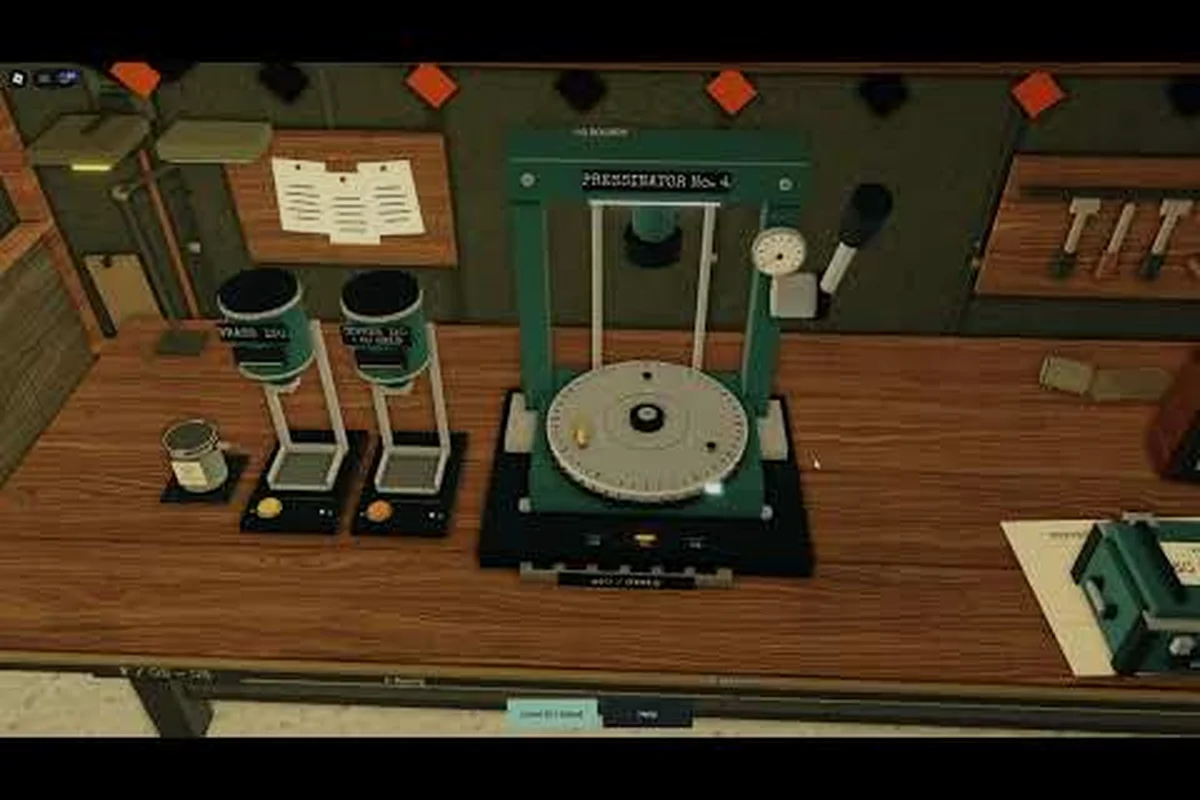
BRASS HELL meta ammo depends on more than raw damage: a round is meta only when it combines useful penetration, affordable materials, and reliable factory orders. The breakdown below identifies the strongest damage and value choices without ignoring the economics of each recipe.
BRASS HELL Meta Ammo Criteria That Actually Matter
Strong BRASS HELL meta ammo must deliver useful damage without becoming a factory bottleneck. The highest damage round is not automatically the best choice because material costs, build time, recipe availability, and the orders each round completes can determine whether a loadout produces real value.
A practical evaluation uses four connected measures: damage per projectile, cost efficiency, order compatibility, and crafting speed. Damage matters most during dangerous encounters, while cost and order value determine whether the ammunition supports a profitable factory loop. A round that performs well on one measure but loses heavily on the others is usually a specialist rather than a general-purpose meta pick.
| Evaluation factor | What strong BRASS HELL meta ammo does | Why it matters |
|---|---|---|
| Damage | Produces meaningful damage without requiring excessive shots | Speeds fights and reduces ammunition waste |
| Material cost | Uses affordable or readily available inputs | Preserves factory profit and workshop capacity |
| Order usefulness | Fits common customer requests | Generates income while it is being crafted |
| Crafting speed | Can be produced without starving other recipes | Supports steady production and emergency orders |
| Availability | Remains practical after its first unlock | Stays useful throughout a run |
Distinguishing raw power from lasting usefulness
The BRASS HELL best damage rounds often dominate a direct comparison, especially when several projectiles can hit the same target. Yet their real value depends on whether the ammunition uses materials that remain economical after the player has established a stable production chain. An expensive round can outperform a cheaper option in a short encounter while producing inferior results across dozens of orders.
Best value rounds provide the more reliable foundation for most runs. They combine decent combat performance with acceptable margins and broad applicability, which lets a factory keep functioning when resources become scarce. The strongest overall BRASS HELL meta ammo therefore changes as a run develops: early rounds need to be cheap and simple, while later rounds can justify more demanding recipes when better materials are available.
A broad BRASS HELL round comparison can help readers compare ammunition beyond a single damage ranking. For this guide, however, the key question is which round performs the best combined job in a normal production cycle.
BRASS HELL Best Damage Rounds by Progression Stage
BRASS HELL best damage rounds are best identified by their role at each progression stage. An early-round recommendation should be affordable and easy to repeat, whereas a late-round recommendation should punish difficult targets while preserving enough value to justify its materials.
Because the available ammunition recipes depend on the workshop loadout, exact unlocks may vary by run. The stage labels below describe practical roles rather than permanent labels. This also means that player reports and community testing should be treated as supplementary evidence when a specific recipe or enemy interaction changes.
| Progression stage | Recommended ammo role | Damage potential | Factory value | Best use |
|---|---|---|---|---|
| Early game | Reliable starter ammunition | Moderate | High | Frequent orders and light combat |
| Mid game | Balanced general-purpose round | High | High | Mixed combat and factory pressure |
| Late game | Maximum-power specialist | Very high | Moderate | Difficult enemies and high-value contracts |
| Endgame | Premium efficiency round | High to very high | High | Repeated combat with optimized resources |
Early-game BRASS HELL low tier rounds
BRASS HELL low tier rounds remain relevant because early factories cannot absorb expensive failures. A weak round with inexpensive materials may still be preferable to a theoretically stronger recipe when the latter consumes rare inputs or creates delays in customer orders. Players should look for a round that can clear basic threats while leaving enough resources to expand the workshop.
The strongest low tier ammunition usually follows a simple production rule: one inexpensive production chain should still make meaningful money after paying for ingredients and workshop time. This makes low tier rounds valuable not because they dominate encounters, but because they let the player build a reliable foundation before unlock costs and enemy strength increase.
If a round becomes unnecessary because every order demands higher damage, its value can disappear. Until that point, keeping a dependable early recipe active gives the player more choices when an urgent order appears. A dedicated BRASS HELL bullet tier list can help separate rounds by overall type, while this ranking focuses on their production role.
Mid-game BRASS HELL meta ammo
Mid-game ammunition occupies the most useful portion of a run because the factory has wider access to materials and encounters begin demanding more reliable damage. This is where BRASS HELL meta ammo typically becomes a balanced round rather than an emergency choice or a luxury specialist.
A good mid-game round should handle repeated encounters without exhausting resources, have a meaningful chance of completing valuable orders, and avoid monopolizing the workshop. The balance threshold is more important than the absolute damage number: if a round costs several times as much as a comparable option and takes much longer to build, its extra power may not compensate for lost production time.
Community experience consistently treats consistency as a major advantage in this stage. The factory-ready threshold means that a round is valuable when it can be produced repeatedly without interrupting more profitable specialties. That makes the mid-game recommendation especially useful for players who want a dependable ammunition source rather than the highest possible shot-to-shot damage.
Late-game BRASS HELL high tier rounds
Late-game BRASS HELL high tier rounds shine in demanding encounters, but their recipes often demand more valuable inputs and better workshop preparation. Their extra damage can reduce the number of shots needed, save time during difficult contracts, and make dangerous orders safer to accept. Even so, high tier ammunition must justify its production cost through results that the player can reliably measure.
The deciding factor is often marginal efficiency. If an advanced round only offers a small improvement over a mid-game option while consuming scarce components, it may create a false sense of progress. The premium efficiency threshold is reached when the round either saves enough production time, completes noticeably more demanding orders, or avoids losses that a cheaper round would permit.
Players who want a broader ranking can consult the strongest ammunition overview. That comparison is useful for maximum power, while the meta ranking remains stricter because it also considers materials, repeat orders, and how often a recipe can be sustained.
BRASS HELL Best Value Rounds for Factory Profit
BRASS HELL best value rounds excel when their income or order usefulness outweighs their combat power. In a factory-focused run, ammunition is not merely equipment for fighting; it is also a product that must clear customers, compete for attention, and support every other production chain.
Value depends on several linked calculations: material yield, sale price or order value, crafting time, and the chance that a customer requests the finished round. A round with excellent profit per unit can still be weak if it rarely matches a live order, while a frequently requested round may be valuable even when its ingredient cost is not the lowest.
| Ammo-use case | Value advantage | Cost weakness | Recommendation |
|---|---|---|---|
| Common low tier round | Cheap inputs and quick production | Low damage in hard fights | Keep as the dependable baseline |
| Balanced mid-tier round | Strong order coverage and steady profit | May cost more than starter ammo | Best general factory choice |
| Specialist high tier round | Premium price or difficult-order access | Expensive ingredients and slow setup | Craft for profitable targets |
| Excess-production round | Good use of abundant surplus materials | Poor fit for urgent orders | Use when demand is low |
The most efficient general-purpose choice
The most efficient general-purpose round does not need to top every damage chart. It should provide enough force for standard enemies, remain profitable after ingredient costs, and fit enough customer requests to keep the workshop active. This combination creates more value than occasional super-powered rounds that sit unused between contracts.
Factory value comes from repetition. A recipe that completes profitable orders several times can outperform a rare round that produces more damage but cannot sustain a production rhythm. For this reason, BRASS HELL best value rounds are often the better foundation for BRASS HELL meta ammo, even when a harder-hitting specialist exists.
The workshop ranking provides another useful angle because ingredients, speed, and order access affect ammunition as much as raw statistics. Readers comparing those systems alongside the workshop tier list can identify where a round creates genuine production leverage instead of merely consuming resources.
When high damage becomes good value
High damage can create value in less obvious ways. Fewer shots may reduce total ammunition consumption, shorten encounters, and prevent a factory from losing money on failed orders. The apparent expense of one premium round may also be misleading if its recipe uses materials that are otherwise difficult to sell or convert into cash.
The best time to favor high-damage ammunition is when the customer order rewards delivery, the enemy threatens the workshop, or another product would otherwise occupy the production slot. In ordinary low-danger periods, however, a cheaper round may deliver better hourly value because it can be made more often.
BRASS HELL Round Comparison: Power, Cost, Speed, and Orders
A useful BRASS HELL round comparison separates raw performance from operational value. Damage should be one column rather than the entire decision, because the number of rounds needed to defeat an enemy does not reveal the material expense, the number of potential orders, or how often the workshop can repeat the recipe.
| Round profile | Damage | Cost | Crafting speed | Order usefulness | Overall meta position |
|---|---|---|---|---|---|
| Cheap starter | Low to moderate | Very low | Fast | Broad early demand | Essential early baseline |
| Efficient all-rounder | Moderate to high | Medium | Medium | Broad demand | Strongest general-purpose pick |
| Powerful generalist | High | Medium to high | Medium to slow | Moderate to broad | Excellent mid or late pick |
| Premium specialist | Very high | High | Slow or complex | Narrow high-value demand | Best for specialized situations |
| Luxury specialist | Maximum | Very high | Slow | Very narrow | Useful only when fully optimized |
Why damage alone creates misleading rankings
A single encounter can make the highest-damage round look unbeatable, especially when ammunition is plentiful and the player has no other objective. Production changes that result because every craft consumes materials, time, and attention. The correct question is not whether round A hits harder, but whether it creates more usable output across the next several orders and encounters.
Damage-per-resource efficiency offers a better comparison than raw damage. Consider how many enemy actions occur before a target falls, how many shots miss or overkill, and how much value the same material budget could create through another order. If a premium round eliminates a dangerous enemy in fewer actions, it can be efficient; if it barely improves combat time, its value depends on price and customer demand.
The practical meta score
A simple meta score can organize these ideas without pretending to be an exact mathematical formula. Start with combat effectiveness, add order value, subtract material cost, and then penalize slow or complex recipes that occupy the workshop. This process keeps the analysis understandable while still recognizing that the best ammunition can change by circumstance.
| Meta factor | Weight | Reason |
|---|---|---|
| Combat effectiveness | High | Ammunition must survive dangerous orders |
| Profit or order value | High | Crafting should support the factory economy |
| Ingredient cost | Medium | Better margins create room for growth |
| Crafting time | Medium | Faster recipes increase production opportunities |
| Availability | Low to medium | Reliable access keeps a round practical |
| Specialization | Low | Niche strength matters less than broad usefulness |
This framework makes BRASS HELL meta ammo a role-based recommendation instead of a permanent winner. A round that earns an S rank for combat may rank lower for value, while an A-rank generalist may be the best ammunition for a complete run because it rarely creates a bad production decision.
Practical Factory Strategies for Using Meta Ammo
Choosing BRASS HELL meta ammo is only half of the optimization. Production timing, material reserves, and customer priorities determine whether the correct round is actually available when it is needed. A strong recommendation should therefore be paired with a repeatable factory routine.
Maintain a production ladder
A reliable factory keeps ammunition at several levels rather than relying on one universal recipe. The production ladder normally consists of a cheap baseline, a balanced mid-tier round, and a powerful specialist reserved for valuable contracts or dangerous encounters. This arrangement prevents a material shortage from stopping every form of output at once.
| Factory phase | Primary action | Ammo choice | Reason |
|---|---|---|---|
| Establishing income | Fill common orders quickly | Low tier baseline | Minimizes startup cost |
| Expanding capacity | Balance income and survival | Balanced generalist | Supports stable growth |
| Entering dangerous contracts | Improve combat efficiency | High tier specialist | Protects valuable operations |
| Peak optimization | Match output to demand | Rotating top-value recipes | Avoids wasted production |
Read the order before committing
Customer requests should guide ammunition production whenever possible. If a valuable order calls for a round that the workshop can produce, crafting it is both a direct sale and a combat improvement. If the request has little value while the player is short on money, a cheaper product may keep the business solvent until a better opportunity appears.
Material planning matters just as much. The stockpile threshold should leave enough common ingredients for baseline orders while reserving premium components for high-value work. This prevents a player from using every attractive ingredient on damage and discovering later that the factory cannot complete ordinary requests.
Keep a fallback recipe
Every ammunition strategy needs a fallback because enemies, accidents, and changing orders can disrupt a planned build. A costly recipe should never be the only option when normal orders must be completed. The fallback round should use plentiful materials, have short crafting time, and remain useful enough to defend the workshop if unexpected enemies appear.
Players who want a complete ranked view can compare the overall BRASS HELL tier list. The same principle applies across categories: a theoretically excellent choice has less value when it cannot be produced reliably, so practical rankings should account for access and timing rather than peak performance alone.
Common Mistakes When Judging BRASS HELL Meta Ammo
The most common mistake is treating damage as the only stat that matters. Another is ignoring the time lost while collecting ingredients or waiting for a workshop slot. A round can look excellent in isolation and still be a poor factory choice if its materials are unavailable at the moment they are needed.
Chasing maximum damage too early
Premium ammunition can restrict growth when a player has not yet established reliable income. Spending scarce money on the strongest projectile may leave the factory unable to complete simpler orders. At this stage, BRASS HELL low tier rounds often create the strongest long-term value by supporting faster expansion and more production attempts.
Ignoring order value
A round does not need to be the cheapest to be profitable, but its selling context matters. If no customer wants it, its damage may have little financial value. A moderate round with frequent demand can outperform a stronger product in the same shift because the factory sells it instead of storing it.
Ignoring build complexity
Complex recipes may offer impressive results, but they demand attention and often require multiple inputs. The setup tax includes ingredient gathering, production sequencing, and the risk of tying up a workshop slot. This tax is acceptable for high-value contracts, although it is difficult to justify when producing a basic staple.
Treating community rankings as permanent
Community experience is useful for identifying practical patterns, but recipes, unlocks, and balance may change as development continues. Recommendations reported by players should therefore be checked against the current version in normal play. As of October 31, 2026, the safest general conclusion is that balanced general-purpose ammunition remains the most reliable meta foundation, while specialist rounds shine under clear demand.
Frequently Asked Questions
What is the best BRASS HELL meta ammo for a normal run?
A balanced general-purpose round is usually the best BRASS HELL meta ammo because it combines credible damage with manageable material costs and broad order usefulness. It outperforms a specialist in early and mid-game factories, yet it remains useful later when extreme damage is not required. Keep a cheaper baseline and a premium specialist for specific situations.
Which BRASS HELL best damage rounds should a player prioritize?
Prioritize the highest-damage round that can be crafted without disrupting more profitable orders. Extra power matters most against dangerous enemies and difficult contracts, but it has limited value when materials are scarce or no customer requests it. Compare damage-per-resource efficiency instead of ranking rounds solely by their maximum hit value.
Are BRASS HELL best value rounds better than premium ammunition?
Often, yes. A strong value round can be manufactured repeatedly, completes common orders, and keeps the workshop profitable. Premium ammunition becomes worthwhile when it saves enough combat time or fulfills high-value contracts. During uncertain periods, keep the cheaper recipe active so one difficult enemy does not disrupt the entire factory.
Should players craft BRASS HELL high tier rounds early?
Usually not, unless the workshop already has surplus materials and a suitable order. Early factories benefit more from cheap rounds that protect liquidity and expand production. High tier ammunition makes stronger sense after materials become dependable and its crafting time can be justified by difficult targets or unusually valuable contracts.
How do low tier rounds remain useful in BRASS HELL?
Low tier rounds remain useful as the dependable baseline of a factory. They cover ordinary orders, consume accessible materials, and prevent the workshop from stopping when premium ingredients are unavailable. Even late in a run, keeping one inexpensive recipe ready can provide steady income and emergency defense without competing with advanced production chains.