
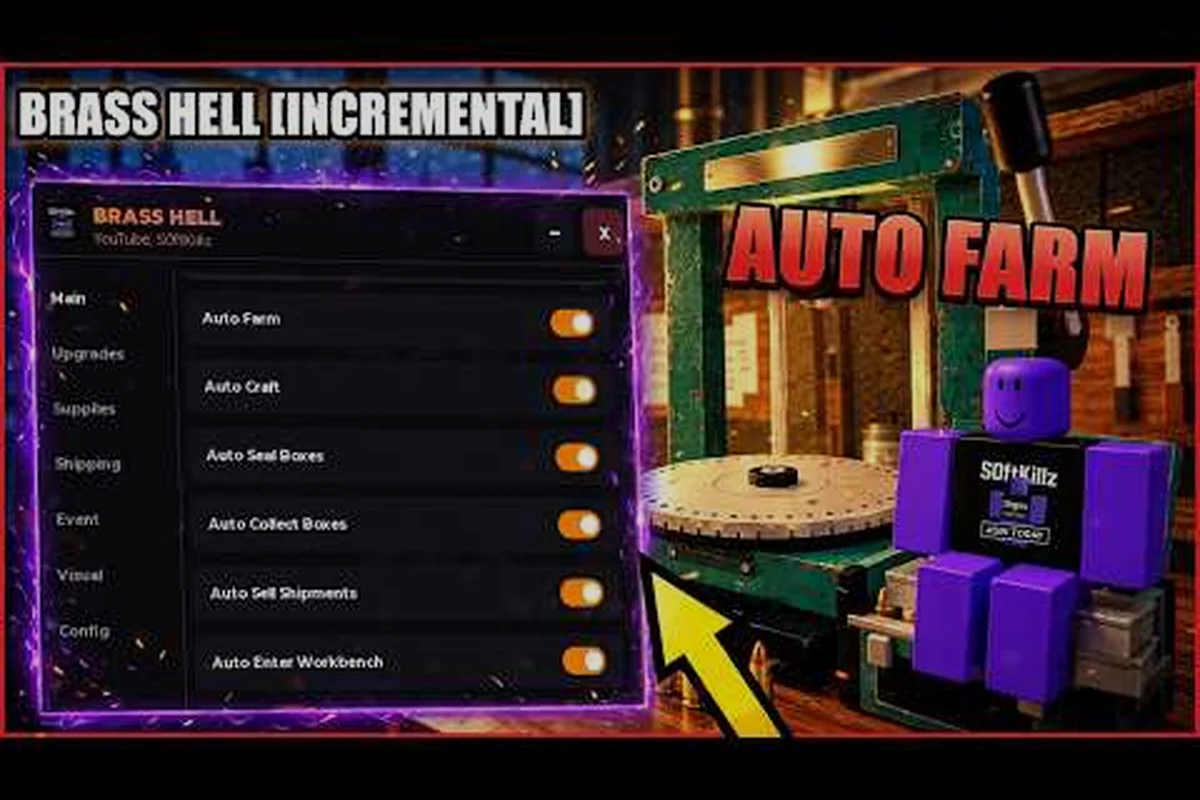
BRASS HELL how to speed up gameplay by shortening press idle time, expanding crate capacity, and reinvesting shipment income into higher-output equipment. A solo factory becomes faster when every production choice improves the next run instead of merely adding another task.
BRASS HELL Gameplay Speed Starts With Bottleneck Control
The fastest way to improve BRASS HELL how to speed up gameplay results is to identify the station that repeatedly stops production. Raw production numbers are useful, but a balanced line that keeps working matters more than a theoretical maximum. If presses wait for ammunition, crates, or shipment space, adding speed to the wrong machine can increase congestion instead of revenue.
This guide focuses on measurable solo habits: fewer wasted press cycles, stronger crate turnover, and better upgrade sequencing. Because BRASS HELL what happens when you progress depends on how efficiently the factory converts materials into completed shipments, each recommendation is framed as an action rather than an abstract optimization.
Measure the real production delay
Start by watching the line for one complete shipment cycle. Mark three delays: an idle press, a full crate, and a station waiting for ammunition. The most frequent delay deserves the first upgrade or behavior change. If presses stop more often than crates fill, route ammunition sooner; if output disappears because storage is full, collect and deliver crates before adding another production job.
| Observed delay | Immediate action | Long-term investment |
|---|---|---|
| Press repeatedly stops | Reserve ammunition before it runs dry | Improve ammunition production flow |
| Finished crate blocks access | Deliver it immediately | Increase crate capacity |
| Shipment waits for loading | Prepare the shipment area first | Upgrade shipment throughput |
| Player walks between distant stations | Reorder the route | Rearrange production stations |
| One resource is never used | Reduce its production | Convert labor and space elsewhere |
This diagnostic matters because player experience reports often attribute progress to buying every upgrade. A careful bottleneck check is more reliable: it shows which change will remove an actual stop in the chain. Treat any unofficial timing figures as version-dependent, since platform updates may alter menus, pacing, or upgrade behavior.
Cut Walking by Grouping the Four Stages
A reliable loop has four stages: prepare ammunition, run presses, collect finished crates, and ship the output. Keep those stages physically close when possible. Walking is dead time, and dead time compounds every cycle. Even a modest reduction in travel can create several additional productive actions across a session.
Use a short checklist during each run, but time it against the production cycle rather than treating it as a separate admin task: check ammunition before starting a press, confirm crate capacity, collect the oldest finished crate, clear the shipment staging area, and reinvest income as soon as it is available. This keeps every factory action connected to throughput, since a press that stops for ammunition or blocked crates reduces output and forces the player into avoidable idle travel.
-
Check whether the primary press has ammunition.
-
Confirm that crate space remains available.
-
Collect the oldest completed crate first.
-
Keep the shipment staging area clear.
-
Reinvest immediately when currency becomes available.
This routine is the foundation of BRASS HELL early game strategy. Early on, attention matters more than perfect placement because the player is still learning which resource shortages repeat. Once the pattern is clear, a fixed route can replace constant experimentation and make the factory feel substantially faster.
BRASS HELL Early Game Strategy Uses Capacity Before Speed
Early progression is often slowed by trying to maximize every machine immediately. A better approach is to increase throughput in the order that removes constraints. Begin with enough ammunition to keep presses operating, preserve room for finished goods, and confirm that completed products can reach the shipment point without extra detours.
Protect press uptime
Presses are valuable only when material is available on schedule. If a press performs an empty cycle, its displayed speed does not matter. Check the ammunition supply before increasing the number of active presses, because adding another machine can increase idle time when the upstream station has not reached the same production rate.
Community experience generally favors continuous operation over burst production. If the ammunition station and press have different cycle speeds, watch whether shipments from the ammunition station arrive just in time. A tiny buffer can prevent repeated stalls, but a large buffer tied up in crates may reduce overall efficiency.
| Early priority | Why it comes first | Result to target |
|---|---|---|
| Reliable ammunition supply | Prevents empty press cycles | Fewer interrupted runs |
| Basic crate capacity | Protects completed output | Less forced selling |
| Close station layout | Reduces travel overhead | More actions per session |
| Shipment access | Avoids output pileups | Faster final collection |
| Raw press speed | Helps only after the line stays supplied | Higher peak output |
This ordering is capacity-first progression. It does not ignore speed entirely; it simply prevents speed upgrades from hiding a more serious storage or supply problem. The progression guide provides a broader unlock-order framework that can complement this production-focused approach.
Sell on a schedule, not by panic
Beginners often open the shipment process only when the factory is visibly full. That response makes sense during a storage crisis, but it leaves earlier output sitting in crates. Establish a regular shipment interval and prepare the delivery before the expected amount is finished.
For example, if crates fill gradually, deliver when two are ready rather than waiting for every available slot. This creates a predictable rhythm and prevents a single late pickup from interrupting several press cycles. It also gives the player a clear purpose during otherwise repetitive production loops.
Use surplus currency without breaking the line
Early currency should reinforce the current production loop. Buy an upgrade only when it reduces travel, prevents a common stall, or increases the output you can actually store and ship. Cosmetic purchases or disconnected capacity improvements can create a larger factory without increasing income, which is why a simple upgrade payback check is useful.
Before buying, ask three practical questions: does the upgrade shorten a recurring production cycle, can the improved station still accept inputs and dispatch outputs, and does the resulting throughput fit your current crate and shipment capacity? For example, doubling belt speed at a crowded crossing may only create a backup if the downstream machine remains slow, while a modest crate expansion can unlock income sooner because shipped goods convert directly into spendable currency.
-
Does this change remove a delay that happens every cycle?
-
Can the upgraded station keep receiving and sending materials?
-
Will the added output exceed available crate or shipment capacity?
If the answer to any question is no, save the money and keep that capital available for the next bottleneck. In BRASS HELL, speeding up gameplay means spending on the constraint that currently limits income, not merely making the factory look larger. For example, if a belt upgrade adds pressure but downstream machines cannot process the extra flow, wait until crate and shipment capacity can absorb the increase; otherwise, the backlog can erase the gain and force an expensive redesign. Preserve your surplus currency until an upgrade improves a recurring production cycle without creating a new jam.
BRASS HELL Late Game Strategy Scales the Same Bottleneck
Late progression is not solved by endlessly adding presses. As the factory expands, travel and scheduling become more important because every station competes for attention. BRASS HELL how to speed up gameplay at this stage means reducing congestion, prioritizing high-value output, and making sure additional production can be moved without creating a longer route.
Reorder production by value
When several resources sell for different amounts, compare revenue per shipment rather than revenue per single item. A resource with a lower unit price may be better if it fills a shipment more quickly, while a higher-priced item may be superior when transport and handling are already efficient.
| Late-game choice | Advantage | Main caution |
|---|---|---|
| High-value resource | Stronger payout per delivered unit | May require more setup |
| Fast-filling resource | Shorter shipment cycles | Lower value can offset the speed |
| Resource matching existing stations | Fewer new bottlenecks | Limited scaling potential |
| New product line | Greater production variety | Adds routes and supply chains |
| Consolidated output | Easier monitoring and shipping | May waste surplus capacity |
The best choice depends on whether crate space, press time, or walking distance is the limiting factor. Value per slot matters when storage is scarce, while value per cycle matters when active attention is scarce. Measure both before committing to a new product mix.
Create parallel work only when inputs support it
Adding another production chain can increase output, but it may also divide the player’s attention. A parallel chain works best when each branch has independent inputs, clear destinations, and enough crate capacity to hold the finished result. If every branch competes for the same ammunition or shipping point, the added complexity can reduce effective output.
Prioritize these late-game changes in most cases: first identify the factory’s current bottleneck, then improve that constraint instead of adding another production chain. If presses idle because ammunition delivery is slow, increase crate capacity or shorten the route before unlocking extra recipes; if shipping is the limiting factor, reserve nearby storage for the highest-volume product. Measure the result by whether income keeps flowing without long hauling trips, because a larger factory with more walking and empty output slots may actually slow the late game.
-
Place production stages in a compact route.
-
Reserve storage for the resource you sell most often.
-
Keep a buffer between supply and press stations.
-
Remove production lines that no longer contribute income.
-
Prioritize upgrades that shorten walking or prevent stalls.
The end-game efficiency guide is useful for reviewing unlock choices once the basic factory is stable. The key is to align every new system with the current bottleneck rather than expanding simply because new content is available.
Maintain headroom instead of playing at maximum capacity
A factory filled completely with goods may look productive, but it has no room to absorb a timing mistake. Keep a small amount of available crate capacity and make regular deliveries before output reaches the limit. This is especially valuable when a press cycle ends unexpectedly or a supply station needs a moment to catch up.
Operating headroom is the spare capacity that prevents one minor delay from becoming a full shutdown. It does not mean leaving most of the factory idle. It means keeping enough space and materials for the normal sequence to continue without constant intervention.
BRASS HELL Max Level Guide Uses Output Discipline
A maximum-level approach is not simply about reaching the final number as quickly as possible. The strongest BRASS HELL max level guide focuses on repeatable production, efficient upgrades, and avoiding resource loops that consume more time than they return. Level progress comes from completing effective actions, so route and inventory discipline matter as much as button presses.
Track progress by completed shipment
Use completed shipments as the main performance measure. A player may be producing rapidly while shipments remain stalled, so shipment count provides a clearer view of actual progress. Keep a simple record of how many deliveries were completed in each session and compare it with the upgrades purchased afterward.
| Session measure | What it reveals | Useful response |
|---|---|---|
| Completed shipments | End-to-end productivity | Preserve the routine that produced the most deliveries |
| Idle press cycles | Material supply gaps | Adjust ammunition priority |
| Uncollected crates | Collection delays | Shorten pickup intervals |
| Walked distance | Layout inefficiency | Rearrange or streamline stations |
| Unspent currency | Delayed reinvestment | Purchase the next proven upgrade |
| Sparse crates | Underproduction or over-collection | Match pickups to actual output |
This measurement system supports BRASS HELL end game content because it remains useful after major systems unlock. When new materials or destinations appear, compare the same signals rather than assuming the old priorities still work. If shipments rise but income falls, the new mix may be less efficient despite greater activity.
Spend resources in a fixed priority order
A fixed hierarchy reduces decision paralysis by assigning every resource a clear job: first secure uninterrupted production, then expand output storage, improve logistics, add a second production source, and only afterward pursue variety or cosmetic upgrades. For example, if a belt constantly backs up because the current production stop lacks capacity, buying a higher-tier machine before correcting that bottleneck can increase throughput without improving delivery speed. Following the same order from the early game into the end game prevents research and credits from being spread across competing priorities, making it easier to identify which upgrade produced measurable gains and which purchase merely added cost.
-
Remove the current production stop.
-
Increase the capacity needed to hold output.
-
Improve shipment frequency and collection speed.
-
Add another productive source.
-
Add variety or advanced production.
-
Purchase cosmetic or low-impact improvements.
The first two steps often provide the fastest return because they protect every subsequent action. If you are unsure what to do next, the starter and settings guide can help with the initial setup, while this progression system keeps later purchases aligned with measured factory behavior.
Stop when output exceeds your ability to collect
There is a practical limit to how fast one player can move through a growing factory. If crates regularly accumulate while presses run, producing more is not progress. Reduce active presses, shorten the collection route, or make shipments before increasing output again.
This is the final principle behind efficient solo progression: speed comes from maintaining a completed cycle, not maximizing a disconnected machine. It also explains what changes after advancement—more recipes, larger systems, and tougher logistical problems, but the same need to keep supply, production, storage, and shipment aligned.
BRASS HELL Progression Checklist for Faster Solo Runs
Use this final checklist before each session to improve BRASS HELL how to speed up gameplay without relying on co-op or advanced interface knowledge. Prioritize farming experience toward your next level, route efficiently through available encounters, and track which upgrades, weapons, or consumables remove the most time from each stage. For example, compare the damage and fire rate of your current weapon before investing in a minor stat boost, then use that setup to clear weaker enemies quickly rather than prolonging fights with unnecessary attacks.
Start-of-session check
-
Review the previous shipment count and largest recurring delay.
-
Confirm ammunition is available for the first press cycle.
-
Leave enough crate capacity for the expected output.
-
Position the route so collection and shipping happen in one continuous movement.
During production
-
Collect crates before they block another station.
-
Deliver when the shipment threshold is reached, even if space remains.
-
Watch for empty press cycles and address supply before speed.
-
Reinvest surplus currency into the most obvious constraint.
End-of-session check
-
Record completed shipments and idle press cycles.
-
Buy the next improvement that removes a measured delay.
-
Remove unused production so the route stays manageable.
-
Carry the winning routine into the next session.
The central takeaway is straightforward: reduce idle time before chasing larger numbers. Keep presses supplied, keep crates moving, keep routes compact, and reinvest only after identifying the real constraint. These habits create a faster BRASS HELL early game strategy, a more stable BRASS HELL late game strategy, and a clear answer to BRASS HELL what happens when you progress—more complex systems, handled with the same disciplined bottleneck control.
Frequently Asked Questions
What is the fastest way to improve BRASS HELL gameplay speed?
The fastest improvement comes from removing the delay that repeats most often. Check whether presses idle, crates remain uncollected, or shipping becomes crowded, then address that constraint first. Increasing press speed helps only when ammunition, storage, and collection already keep the production line active.
Should early-game players buy speed upgrades before capacity upgrades?
Usually not. Capacity upgrades are better when presses run out of ammunition, crates block access, or finished goods have nowhere to go. Speed becomes valuable after the line can sustain it. Buying a speed upgrade first may appear exciting while leaving the real bottleneck untouched and wasting early currency.
How can solo players avoid getting overwhelmed by a larger factory?
Reduce the number of low-value or redundant production chains, keep stations close, and use regular shipment thresholds. Favor output you can collect and deliver consistently over isolated peak production. A smaller but uninterrupted factory usually completes more shipments and earns more than a larger system requiring constant correction.
When does BRASS HELL progression become more efficient?
Efficiency improves when each upgrade supports the next part of the production chain. Early on, reliable supplies and storage create consistency; later, route design, shipment timing, and value per crate become more important. Keep tracking completed shipments, since that measurement remains useful even after new recipes and end-game content appear.
Does max-level progression require using every production option?
No. Unlocking more content does not mean every option must remain active. Disable recipes that consume attention without improving shipments, focus on profitable outputs, and keep enough headroom to handle mistakes. The goal is sustained progression, so a smaller set of efficient production lines can outperform an overloaded factory.