
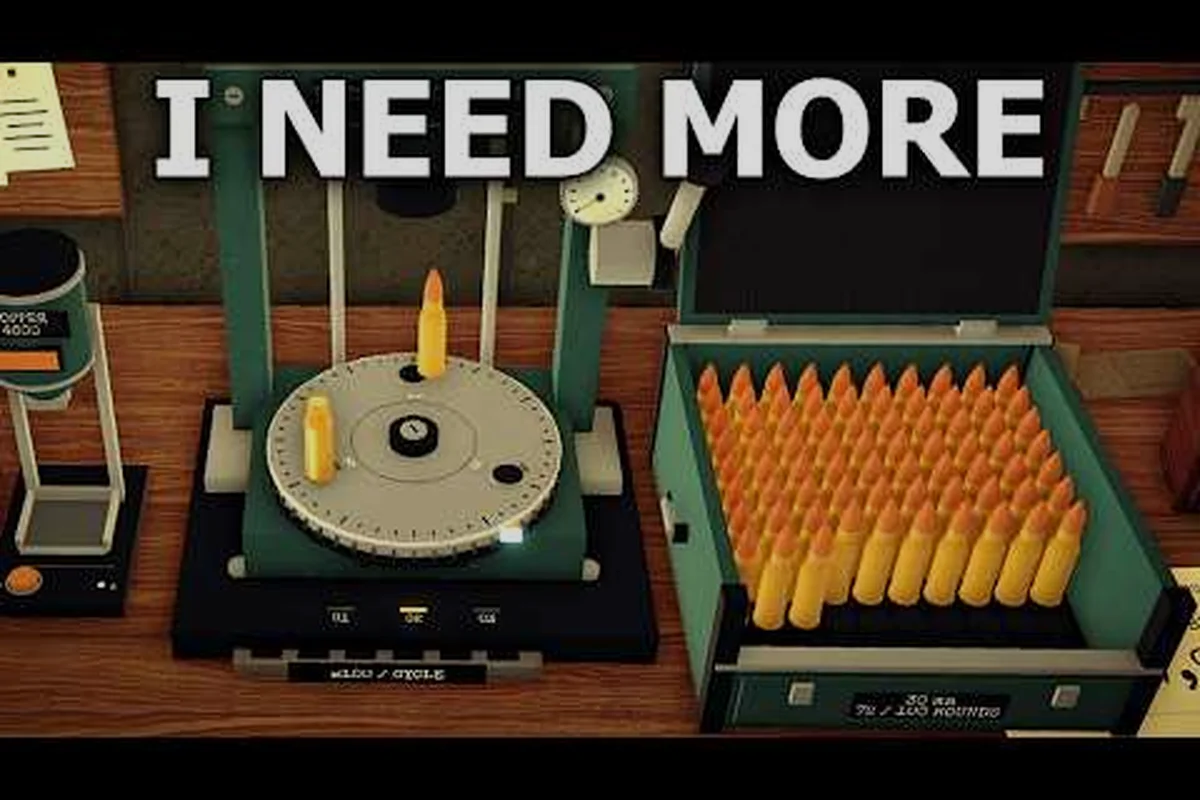
Fast progress in BRASS HELL depends on choosing the right next order, keeping production moving, and reinvesting earnings before the factory needs them. This progression guide maps the route from early shipments through the mid game and late game so each purchase supports the next one.
BRASS HELL Early Game: Build a Reliable Production Loop
The BRASS HELL early game is about establishing dependable production rather than chasing every order immediately. Your priority is to learn which resources convert into income, where bottlenecks appear, and how much cash should remain available for emergencies. A small, consistent loop creates the foundation for every later unlock.
Establish the First Production Chain
Start by identifying the simplest profitable chain available to you. Process the materials or goods required by early orders, then reinvest the resulting income into production capacity. The exact items depend on the orders in your current run, so treat the sequence as a flexible rule: sell only what the next step requires and avoid producing items that cannot be sold before the next useful upgrade.
| Early-game priority | Why it matters | Practical action |
|---|---|---|
| Positive cash flow | Prevents expensive repair or idle-time losses | Complete reliable orders before costly experiments |
| Repeatable production | Creates predictable income | Improve the station used in the shortest repeated cycle |
| Basic capacity | Reduces missed production windows | Buy a modest upgrade instead of maximizing immediately |
| Cash reserve | Covers mistakes and temporary slowdowns | Keep enough for several normal operating expenses |
| Order diversification | Reduces dependence on one buyer | Add a second sale route when the first loop is stable |
This BRASS HELL unlock order is based on economic dependency rather than a fixed purchase list. Each upgrade should either increase throughput, lower operating friction, or open another product that has a dependable buyer. If it does none of those things, it may be a luxury rather than a progression step.
Keep the Factory Busy
An idle machine produces no income, so timing matters more than raw speed during the opening phase. Group orders with overlapping material requirements, prepare resources before beginning a long production job, and avoid accepting a distant order when nearby work can still generate cash. This is the core of efficient BRASS HELL progression: cash in hand prevents bad timing from turning into a failed run.
Community experience generally favors simple, repeatable routines over complicated routing. Since no verified official checklist was available, treat reported player routines as practical guidance rather than fixed rules, and confirm each choice against the current workshop interface and order values.
Avoid Early-Game Overspending
Early income is fragile, so every large purchase creates an opportunity cost. Compare a proposed upgrade with the next bill you expect to face, then ask whether the upgrade increases net output or merely moves the same bottleneck elsewhere. A modest purchase that shortens the full production cycle is usually stronger than a premium upgrade that improves only one station.
For a deeper look at reducing downtime, the solo progression and grinding guide explains how efficient solo play can improve the pace without requiring unnecessary expansion. In BRASS HELL, downtime is reduced by shortening each production cycle and selling finished goods before upgrading another station. For example, a player who delays a new belt until Coal and Iron are consistently selling can preserve cash for the next bill instead of tying it up in a long build queue. If one station still blocks the chain, purchase the upgrade that removes that bottleneck rather than buying equal-value improvements across the map.
BRASS HELL Unlock Order: Choose Upgrades by Dependency
A useful BRASS HELL unlock order connects each purchase to a constraint you have already observed. Do not buy by category appeal alone. Identify what limits output, inspect the cost of the best available solution, and verify that the result creates more usable income than the upgrade costs.
Diagnose the Limiting Factor
When production slows, the answer may not be another machine. It could be insufficient input material, a full output area, a slow loading step, limited storage, or an order that consumes too much time. Diagnosing the constraint prevents duplicate purchases and is central to any BRASS HELL progression guide.
| Symptom | Likely constraint | Best response |
|---|---|---|
| Orders arrive but production remains idle | Missing inputs | Secure a dependable material supply |
| Finished goods accumulate | Full output capacity | Expand storage or improve movement |
| One machine operates continuously | Single-station bottleneck | Upgrade that station first |
| Orders become harder to complete | Time or capacity shortage | Reduce production time before taking larger orders |
| Cash rises but orders stop | Unprofitable product mix | Redirect production toward better-paid orders |
| Later orders require unfamiliar goods | Unopened production branch | Build a small test chain before scaling |
This diagnostic table works across the entire run. Even late-stage factories can stall because of a neglected logistical step, which means visible machinery is not always the real bottleneck. Fixing the constrained stage usually produces a better return than buying the largest object visible in the workshop.
Apply a Dependency-First Purchase Order
Use this sequence when deciding what to unlock next: prioritize the production-chain bottleneck rather than the largest possible output. For example, if Brass Ingots repeatedly wait on a slow Furnace, improve the Furnace or add a parallel production step before buying a faster Sawmill; similarly, delay a higher-tier product until its required inputs can be supplied continuously. This dependency-first approach prevents new machines from sitting idle and keeps workshop funds focused on resolving the constraint that currently limits throughput.
-
Secure inputs so a product can be made continuously.
-
Increase throughput at the station that limits the cycle.
-
Improve handling or storage so products reach sale without delay.
-
Open the next product required by more valuable orders.
-
Expand production capacity only after the new chain proves profitable.
The order is flexible because values, availability, and unlocks can vary between runs and updates. Use the workshop’s actual costs and sale prices as the final authority. If two upgrades cost the same, the one that resolves a measured constraint is usually safer than the one that only increases maximum capacity.
BRASS HELL How to Progress Fast: Improve Every Production Cycle
Fast progression comes from earning more while spending less of the run idle. Players often focus on order value, but the larger opportunity is the complete production cycle: acquire materials, manufacture, store, deliver, and reinvest. A BRASS HELL how to progress fast approach improves several small stages instead of chasing one oversized purchase.
Measure the Factory by Cycle Time
Track one normal order from its start to payment. Record where waiting occurs and whether the next order can begin before payment arrives. Cycle time reduction is often more valuable than a one-time price increase because the saved time can be reused on every subsequent order.
| Metric | What to measure | Useful improvement |
|---|---|---|
| Input wait | Time before production starts | Improve material supply |
| Active production | Time spent making goods | Upgrade only if throughput remains limited |
| Output congestion | Time waiting to move finished goods | Add capacity or improve handling |
| Order downtime | Time with no saleable job ready | Keep a low-value backup order ready |
| Reinvestment delay | Time before earnings are spent | Set a spending threshold in advance |
A three-part ledger helps turn these observations into decisions. Record the order, its net profit, and the total time from accepting it to completing it. After several cycles, the ledger reveals whether profit comes from high value, short duration, or reliable repeatability, each of which supports a different upgrade strategy.
Use a Two-Product Production Buffer
Running only the most profitable product creates a fragile factory. If its inputs stop, there is no fallback income. Once the primary chain is stable, reserve part of the available production capacity for a faster, lower-value item. This fallback product can cover essential expenses and fill idle gaps while the main chain prepares.
The best backup is not always the cheapest item. It should combine a short production time with reasonable profit and flexible order availability. Test it with small batches before dedicating a full station, because an attractive unit price can still be a poor backup if it consumes scarce material or requires a distant destination.
Reinvest by Threshold, Not Impulse
Separate operating cash from upgrade money. The operating reserve should cover routine costs, while upgrade money is allocated only when a specific purchase is ready to raise output or unlock a profitable branch. This prevents the common mistake of spending the entire balance on a marginal improvement.
The 30-minute rule is a practical starting point: wait for enough income to cover the purchase plus your operating reserve before committing. If the next upgrade is exceptionally valuable and clearly resolves the current constraint, buying sooner can be sensible. Otherwise, patience prevents a temporary bonus from becoming a cash-flow problem.
BRASS HELL Mid Game Guide: Scale Profitable Chains
The BRASS HELL mid game guide shifts attention from creating a loop to strengthening several connected loops. At this stage, one successful product may fund a second branch, while logistics become more important because the factory is handling more material and more destinations. The correct next unlock usually connects two systems that already generate reliable income.
Build Two Interdependent Production Lines
A strong mid-game factory has a primary engine producing the highest dependable profit and a supporting engine supplying a shared input or filling idle time. This arrangement is more resilient than scaling every station equally because resources remain directed toward products with confirmed demand.
| Mid-game choice | Strength | Limitation |
|---|---|---|
| Expand the primary chain | Maximizes income from proven demand | Vulnerable if its material supply fails |
| Add a second sale product | Diversifies revenue | Requires another production branch |
| Improve shared logistics | Benefits all chains | May produce little visible revenue alone |
| Upgrade the highest-value station | Raises output efficiency | Can be wasted if logistics remain slow |
| Unlock a new order type | Opens better opportunities | May demand costly unfamiliar inputs |
Before expanding, test the candidate branch with the orders currently available. A new product should have a clear buyer, an acceptable profit per time unit, and an input plan that does not consume the material needed by your primary chain. This prevents expansion from creating a larger version of the same bottleneck.
Judge Expansion by Profit per Time
Revenue alone can mislead because larger orders may take longer and carry greater risk. Compare the full order value with production time, operating costs, and the value of the resources it consumes. The useful measure is net profit per unit of factory time, followed by whether that result can be repeated without manual intervention.
Player reports often favor conservative expansion in the middle of a run, but no authoritative current dataset was available to verify a universal best product. Check real order values and workshop costs in your run. Community testing may reveal efficient routes, yet the displayed economy should remain the source of truth.
For a systematic comparison of milestones and checkpoints, the solo unlock-order guide provides a useful framework for deciding when each production branch is ready to scale. Treat it as a routing tool rather than a fixed recipe: record each new product’s cycle time, input cost, selling price, and expected margin, then advance only when the branch still produces strong net profit per factory-time unit after accounting for operating costs. For example, if a product earns more per order but occupies a machine for several extra seconds, its apparent revenue advantage may disappear; a shorter, repeatable cycle can justify earlier expansion and make later product transitions easier to manage.
BRASS HELL Late Game Guide: Reinvest for Maximum Throughput
In the BRASS HELL late game guide, the factory should operate as an integrated system. Simple production speed matters less when storage, transfer, and order timing create the remaining delays. The final phase therefore emphasizes throughput, resilient supply, and upgrades that remove a demonstrated constraint across the whole operation.
Identify the Final Bottleneck
Watch a full late-game cycle rather than individual machines. The bottleneck may occur when the primary line finishes before the support line, when storage lacks room for a valuable burst, or when labor divides too thinly between loading and selling. Bottleneck migration means an earlier upgrade solved one station but caused the next stage to become congested.
Before committing to an expensive late-game purchase, trace one complete production cycle—from ore and plate input through machining, assembly, and shipping—to locate the true constraint. If a faster machine merely shifts the queue to a neighboring station, upgrade the next bottleneck instead: for example, accelerating a furnace is ineffective when the bottleneck has moved to parts fabrication or finished-goods storage. This check matters because BRASS HELL’s strongest late-game machines can still underperform when the supporting production chain cannot absorb their higher output.
-
Confirm that the new upgrade improves the slowest part of the full cycle.
-
Verify that its cost can be recovered through several profitable orders.
-
Check whether it consumes a resource needed by a stronger production chain.
-
Compare its benefit with a logistics upgrade that benefits every product.
-
Keep enough cash for the next ordinary operating expense.
-
Test the change on a small scale when possible.
Prepare for the Highest-Value Orders
Late-game preparation means having the resources and capacity ready before a lucrative order appears. Maintain a small reserve of valuable inputs, preserve space for finished goods, and avoid tying every station into low-margin production. A factory that is fully occupied with inexpensive goods cannot accept a better opportunity without stopping valuable work.
The late game rewards efficiency rather than constant expansion. Reserved capacity is valuable because it lets you accept an order with a short deadline, redirect a station, or use a profitable material before competitors or temporary conditions remove the opportunity.
If your goal is to maximize remaining content after the core factory is stable, the end-game rewards and roadmap can distinguish economic progression from optional completion objectives. Focus first on repeatable high-margin production chains and contract deadlines, since turning those into steady income supports later research and factory upgrades; then pursue scarce recipes, collection milestones, and unlock orders only when they do not disrupt that cash flow. For example, a better-margin order can justify opening a parallel production line, whereas a low-value completion reward may be worth postponing until reserved capacity is no longer needed.
BRASS HELL Progression Tips: A Decision Checklist for Every Purchase
Strong BRASS HELL progression tips focus on repeatable decisions rather than a secret item list. Use a short review after every major purchase, and compare the factory’s performance before and after the change. The goal is not to own every upgrade but to make each unlock improve the next cycle.
Review the Current Bottleneck
Ask four questions before buying: compare the next factory tier against the currently active bottleneck, then check whether its belt speed, worker coverage, or machine throughput can raise effective output per production cycle. For example, a second cutting machine may outperform a belt upgrade if parts wait beside the cutter, while another belt can be wasteful when the bottleneck is machine processing time. Track order volume, cycle time, and storage growth over one shift before committing funds.
-
What specific measurement shows that this upgrade is needed?
-
How much time or material will the upgrade save?
-
Can the factory recover its cost through normal orders?
-
Does the purchase unlock income or merely increase storage?
Write down the expected return and the expected payback order. If the purchase cannot be tied to an observed constraint, postpone it and gather one more cycle of data. This evidence-before-expansion approach prevents costly experiments from becoming normal practice.
Keep the Order Queue Flexible
Avoid accepting every visible order. Compare payment with production time, material availability, and the value of the next opportunity. A smaller order can be better when it keeps the factory active and finishes before a more profitable order becomes available.
Use a running comparison sheet for each order, tracking payment, production time, input stock, and the next job expected. For example, a lower-paying contract that consumes materials on hand and completes in one cycle can fund a higher-value order sooner than a larger contract tied up by a scarce input. This keeps the order queue flexible in the BRASS HELL early game and avoids locking the factory into a delayed payout.
-
Orders that use an input currently available.
-
Orders that complete within one production cycle.
-
Orders that pay enough to cover immediate operating needs.
-
Orders that unlock a better order afterward.
-
High-value orders only when capacity is genuinely reserved.
This ranking supports the broader efficient progression path by connecting each order choice to measurable gains rather than a fixed sequence. In practical terms, treat the order queue as a production-planning tool: compare the order’s payment, its input requirements, its production-cycle length, and the next job it enables. For example, an order using materials already in stock may be more valuable for fast BRASS HELL progression than a larger contract demanding a scarce input, because it preserves cash flow and prevents production capacity from idling. A sequence that repeatedly finishes low-cost orders can also establish a reliable operating base before committing capacity to high-value late-game contracts.
Save Replay Knowledge
Write down three details after a successful run: which chain produced the strongest early cash flow, which purchase removed the first major bottleneck, and where idle time accumulated. Notes are more valuable than vague impressions because they preserve the decision context needed for the next attempt.
Turn each replay into a progression hypothesis: record the chain that delivered the strongest early cash flow, the purchase that removed the first production bottleneck, and the idle time created while waiting for that purchase to pay back. If one chain’s output shortened the wait for another order, note that link too; it explains why a seemingly modest upgrade can accelerate the next stage and reveals which part of your BRASS HELL unlock order should change on the following run.
-
Economy: best order value, input costs, and profitable products.
-
Timing: average production length and recurring idle periods.
-
Unlocks: which order types became available and when.
-
Risks: expensive mistakes, weak branches, and late cash shortages.
A BRASS HELL progression guide should help you adapt, not prescribe a rigid unlock order. Treat each run as a causal chain: an input shortage created a cash-flow problem, a production-chain upgrade solved it, and the resulting throughput or order options determined the next purchase. For example, if an early Brass or Coal chain eased the wait for a higher-value order, test that branch first on the next run. If a machine upgrade increased output but created recurring idle periods, compare that downtime against the upgrade’s cost before repeating it. This makes a BRASS HELL unlock order a sequence of tested hypotheses, improving your BRASS HELL early game without ignoring mid- and late-game constraints.
Frequently Asked Questions
What is the best unlock order in BRASS HELL?
There is no single fixed order for every run, but the best progression begins with a profitable production chain, followed by the station that limits its throughput. Add storage or handling only when observed congestion supports the cost, then unlock a second profitable branch. Always compare each upgrade with the current order values and workshop prices.
How can I progress faster in BRASS HELL?
Measure the time from accepting an order to receiving payment, then remove the longest reliable delay in that cycle. Keep a cheap fallback product available, regroup orders that share inputs, and reinvest once an upgrade can be paid for without eliminating your operating cash reserve. Faster progress comes from repeated cycles, not one oversized purchase.
Should I buy every available upgrade?
No. An upgrade is worth buying when it resolves a measured constraint, increases dependable output, or opens a profitable order. Avoid buying because an item is unlocked or appears stronger. If it only adds capacity without reducing a real bottleneck, postpone it and compare its expected return with your existing operating expenses.
What should I prioritize during the BRASS HELL mid game?
Prioritize two interconnected production lines: one dependable primary engine and one flexible supporting engine. Use shared inputs where possible, maintain enough material for both chains, and test the second branch with small orders before scaling it. The best upgrade is the one that improves throughput without starving the factory’s most profitable product.
Is expanding always better than upgrading in BRASS HELL?
No. Expansion adds new products or routes, while an upgrade improves an existing part of the factory. Upgrade the demonstrated bottleneck when the current chain is profitable; expand when a confirmed order provides a dependable buyer and the new chain can run without consuming essential resources. Reassess after every change because bottlenecks can move.