
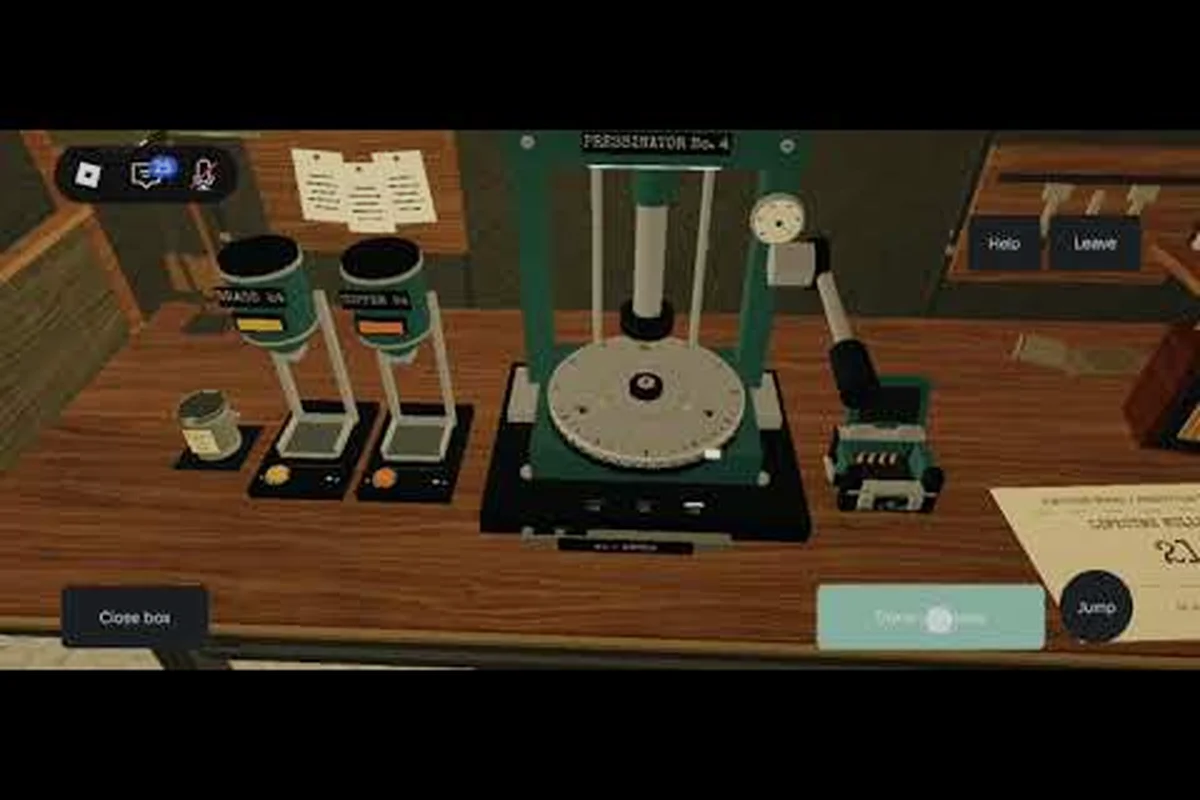
Coordinating four people in BRASS HELL turns a small workshop into a tightly timed production line. This BRASS HELL 4 player guide shows how to gather friends, assign clear jobs, and prevent the press, crates, and delivery schedule from falling into gridlock.
BRASS HELL 4 Player Guide: Build a Clear Production System
A successful four-player crew works from a shared plan rather than four separate task lists. Each person should own a station, understand what the others need, and have permission to resolve bottlenecks before they become delivery failures. The result is a factory that keeps moving without constant micromanagement.
This BRASS HELL 4 player guide focuses on the practical systems that make cooperative play easier: communication, role division, routing materials, and preparing for busier shifts. It also works as a practical extension of the BRASS HELL beginner guide for players who understand the basic production loop but have not yet organized a larger crew.
Establish the Crew’s Production Agreement
Before starting a session, agree on three rules. First, every station has an owner. Second, finished work moves through a predictable handoff point. Third, anyone may call a bottleneck, but only one person changes the immediate task at a time. These rules reduce interruptions and make it easier to identify the reason a production chain has slowed.
| Crew Agreement | Owner | Benefit |
|---|---|---|
| Primary station | One player per production area | Clear ownership prevents duplicated work |
| Material staging | Rotating every few minutes | Keeps floors clear and components accessible |
| Bottleneck response | Whoever notices the issue | Removes delays without abandoning another station |
| Delivery check | One designated player | Prevents overlooked orders and route conflicts |
Use a simple callout system instead of long conversations while working. For example, “press ready,” “crate full,” or “delivery due” communicates the exact state without requiring players to stop and search for one another. Named handoff points are especially useful because teammates can identify where materials belong without blocking a corridor.
Set the Four Roles
Four-player sessions work best when each role has a clear priority and a backup. Exact station assignments may change as the factory expands, but ownership should remain recognizable. For example, the press operator should focus on keeping production moving while the material handler refills the press; if the staging area fills, the delivery runner can collect a ready order instead of leaving finished goods stranded. This approach keeps BRASS HELL machines and delivery routes coordinated without turning cooperation into fixed character restrictions.
| Role | Main Responsibility | Backup Responsibility |
|---|---|---|
| Press operator | Keep the press active and manage processed materials | Help empty finished output |
| Material handler | Move raw supplies and refill stations | Clear completed crates |
| Packager | Sort and package finished goods | Prepare delivery batches |
| Delivery runner | Collect orders and complete routes | Cover packing during a rush |
The roles should be treated as priority lanes, not rigid character restrictions. If the delivery runner encounters a blocked route, the packager can collect one ready order while the runner resolves the obstruction. Likewise, the press operator may need to pause production when the staging area reaches capacity. This flexible coverage is what prevents a four-player group from becoming four disconnected workers.
BRASS HELL Multiplayer Guide: Prepare the Session
Preparation determines whether a group can enter a shift smoothly or spend its opening minutes searching for one another. The multiplayer guide should cover the host, guest invitation, join timing, and a brief equipment check before the factory begins accepting work.
Players can consult the broader BRASS HELL friends guide for relationship and group-play preparation, while the focus here remains on running a full four-person shift. In general, assign a host early and make the first objective clear: get every player into the same session, confirm the lobby state, and identify the initial delivery priority.
Invite Friends and Build the Lobby
Start with the platform’s standard multiplayer menu, then choose the option for hosting or joining a cooperative session. Menu labels can vary by build or platform, so select the option that creates or enters a multiplayer lobby rather than a single-player save. Share the session details through the group’s normal communication channel, then have each guest confirm the host name before joining.
For BRASS HELL, a stable four-player lobby depends on session size being set correctly and everyone entering the same co-op run. Use a dedicated invitation message containing the host’s exact player name, confirm that the platform supports four participants in the selected mode, and avoid opening a second session while the first is still waiting. If a guest cannot find the invite, check the platform account and friend-list permissions before restarting the lobby; otherwise, a mismatch between accounts or session settings can leave the party unable to assemble.
-
The host creates the multiplayer session.
-
The host waits for the expected player count to appear.
-
Each guest joins through the invitation or session browser.
-
Every player confirms that the other players’ names are visible.
-
The host starts the session only after all four players are ready.
If a connection fails, avoid letting one player enter while the others remain in the menu. Repeatedly entering can leave players unsure whether they are connected twice or not connected at all. Return to the lobby, confirm the visible player list, and rejoin as a group. The same principle applies when a player changes their network or closes an invitation window.
Confirm Join and Connection States
A successful connection should show the correct player list and allow another participant to recognize the new arrival. Voice communication is helpful, but it should not replace the visual lobby check because a player may hear instructions without actually being present in the session.
| Connection Symptom | Likely Problem | Corrective Action |
|---|---|---|
| Guest name never appears | Invitation expired or session changed | Request a fresh invitation and recheck the lobby |
| Player enters but work is delayed | Session is still starting | Wait for the host to begin the shift |
| Only one guest loads correctly | Connection instability | Return to lobby and reconnect together |
| Player appears twice | Repeated join attempt | Leave the extra session before starting |
| Controls feel delayed | Network congestion | Pause major decisions until input catches up |
For anyone asking how to join a server in this setting, the practical answer is to use the multiplayer lobby or session browser offered by the build, accept the host’s invitation, and verify the full player roster before starting. Do not rely on a remembered server name if the game presents lobby-based sessions instead; the host’s current session is the reliable reference.
Run a Two-Minute Equipment Check
A short check prevents avoidable mistakes once orders begin. Each player should confirm that movement, interaction, and relevant production controls respond correctly. Players should also verify that audio or text communication is reachable, even when the game does not support voice chat directly.
Before starting, identify the press, the material input area, the packaging station, and the delivery point. Agree on the primary staging location and make sure it is not a doorway or the same tile occupied by a machine. Factory congestion is often a placement problem rather than a lack of effort, so clear routes deserve as much attention as faster button presses.
BRASS HELL How to Play with Friends: Divide Production Work
Once the session begins, the crew needs a visible workflow. A simple production chain might move raw inputs to the press, processed material to a staging area, finished goods to packaging, and completed orders toward delivery. The exact sequence can vary, but everyone should understand the intended flow before assigning stations.
The key advantage of four players is parallel work. One player can continue pressing while another clears output, a third prepares packaging, and the fourth handles deliveries. This reduces idle time because one bottleneck no longer halts every other task.
Map the Production Chain
Use a whiteboard, voice call, or shared notes to represent the chain in order. Keep the representation at a practical scale: “raw stack to press,” “press output to table,” “table to packaging,” and “package to exit.” Too many labels can make simple work harder to communicate.
| Production Stage | Primary Owner | Required Handoff |
|---|---|---|
| Raw material intake | Material handler | Supplies placed beside the press |
| Press operation | Press operator | Pressed output moved to staging |
| Staging and sorting | Material handler or packager | Correct goods grouped for packaging |
| Packaging | Packager | Completed crates moved to delivery staging |
| Delivery | Delivery runner | Orders removed and route cleared |
A reliable handoff uses destination-first placement: finished items go where the next person expects them. Instead of placing a package in a random open tile, deliver it to the designated staging marker. This reduces sorting time and lets a replacement player take over without a lengthy explanation.
Balance Speed Against Accuracy
Fast groups often make mistakes by treating every item as interchangeable. A better approach is to prioritize the next required order. If two orders are active, compare their deadlines and preparation needs, then direct labor toward the one that can be completed cleanly. Speed matters, but a completed order with correct materials is more valuable than several unfinished attempts.
| Situation | Better Decision | Reason |
|---|---|---|
| Press output piles up | Pause another pickup task and clear it | Floor space affects every station |
| Two orders are due soon | Select the simpler preparation first | It creates a reliable completion |
| Material stock is low | Assign a temporary supply run | Production stops without input |
| Route is blocked | Clear the path before packaging more crates | Finished goods cannot move through congestion |
Use short planning windows. Instead of reorganizing the entire factory, review the next minute of work. Will the press have input? Is the staging area clear? Is the delivery route open? Are all four players occupied with useful tasks? This method is simple enough to repeat without turning every shift into a meeting.
Announce the Machine State and the Next Step
Status calls should describe the machine, the condition, and the required response. “Press done” is useful, but “press output ready for collection” is clearer. “Order due” communicates urgency, while “delivery route blocked” identifies the exact area requiring attention. In BRASS: HELL, pairing each call with a machine or route name, such as “press output ready” or “delivery route blocked,” prevents players from investigating the wrong station when several production lines and material-handling areas are active at once. Keep the message brief enough to hear during a busy shift, but include enough location detail for the nearest available operator to act without interrupting the machine’s current process.
Agree on a shared vocabulary before a production rush turns calls into guesswork. In a four-player BRASS: HELL session, assign one player to the press line, one to material handling, one to staging, and one to delivery routes; each should use the same machine-specific phrase, such as “press output ready,” rather than a generic “machine done.” This prevents a worker at the wrong press from abandoning a valid task and gives the nearest operator a clear reason to interrupt production. Keep these status calls brief, but preserve the machine, condition, and response needed for immediate action.
-
Supply low: raw material needs replenishment.
-
Output ready: processed material is waiting for collection.
-
Staging full: no more goods should arrive at the staging point.
-
Delivery clear: the route has been checked and is ready to use.
These calls are simple because each identifies a state rather than a solution. That lets the nearest available player respond while the station owner continues working. Over time, a four-player crew can develop faster shorthand, but it should still be understandable to a newcomer.
BRASS HELL Invite Friends Workflow: Build a Repeatable Routine
The best invitation workflow is the one that requires the least effort when everyone is available. Assigning one host, using consistent descriptions, and maintaining a short setup checklist reduces the chance that a spontaneous session turns into a long troubleshooting exercise.
Players who want more detail can use the BRASS HELL cooperative guide for smaller party arrangements, then apply the same lobby discipline in a four-player group. The key is to treat joining as a coordinated action rather than four independent attempts.
Prepare Before Calling the Group
Send one clear invitation with the session purpose, required player count, and expected start time. If the group plans to play a specific challenge, name it rather than saying only “join the game.” A precise request makes it easier for players to prepare the right save state, loadout, or difficulty expectation.
| Preparation Step | Host Action | Player Confirmation |
|---|---|---|
| Session creation | Open the multiplayer lobby | Wait for the host’s signal |
| Guest access | Distribute the current invitation | Join once from the displayed session |
| Roster check | Confirm four visible names | Confirm your own name appears |
| Readiness | Start after everyone is ready | Complete the equipment check |
| Roles | Assign initial priorities | Accept or trade a role |
Record important session details outside the game, such as the host’s name and whether players need to launch the same platform build. This is especially helpful when someone reports a loading problem: the group can quickly rule out a mismatched session before trying other solutions.
Handle Late Additions and Dropouts
A late player should receive the current invitation rather than an outdated one. If the host has already moved to a new lobby, ask everyone to wait until the replacement lobby is ready. Trying to join different generations of the same session often creates confusion about who is actually in the group.
If a player disconnects, preserve the remaining crew’s workflow. The material handler can cover pressing output, while the delivery runner checks whether the group can still complete active orders. Avoid replacing the missing role immediately unless the remaining three players are already overloaded. Graceful role compression keeps production stable during a brief disconnect and avoids leaving stations unattended.
Use the Friends Guide for Long-Term Groups
Long-running crews benefit from recording which roles each person enjoys. Some players prefer steady machine operation, while others are better at route management and order prioritization. Keep the record simple, such as “press,” “materials,” “packing,” and “delivery,” then rotate secondary tasks when the group wants variety.
This BRASS HELL how to play together approach treats communication as part of the game rather than an optional extra. Each player knows what to watch, what to announce, and when to help. That consistency makes it easier for friends with different schedules to join without requiring a full briefing every time.
BRASS HELL 4-Player Scenarios: Solve Common Factory Problems
Even with good communication, a four-player crew will encounter overlapping tasks. The strongest response is to identify the constraint, move one worker toward it, and postpone a non-urgent task. Diagnosing the bottleneck is faster than having every player rush to the same machine.
When the Press Is the Bottleneck
If processed material accumulates faster than the crew can package it, the press should pause until space clears. Players might mistake a full output area for productive speed, but uncollected output is a warning sign that the next stage cannot absorb production.
The press operator can communicate the exact output count while another player clears it. If raw material remains in the intake area, keep the station supplied but avoid producing excess. This preserves a clean work surface and prevents the output pile from spreading into walking paths.
When Deliveries Overlap
Two delivery routes may compete for the same narrow path. Before choosing a route, check whether one order can be prepared faster or completed with a shorter travel distance. The delivery runner should make that call, while the packager keeps at least one completed order ready without blocking the exit.
If timing is uncertain, favor the order whose delivery deadline expires sooner, since a missed deadline can trigger penalties or disrupt the crew’s route planning more severely than briefly abandoning a symmetric route. For example, if two packages are ready but one must reach its destination within a shorter window, the runner should deliver that package first even if doing so means the other order follows a less balanced path. The packager can use the remaining preparation time to stage the next delivery, while the crew communicates the swap so nobody waits at the wrong pickup point. Correct prioritization protects the delivery chain; perfectly mirrored routing does not compensate for one failed order.
When Materials Scatter Across the Floor
Scattered items indicate a weak staging system. The next time the crew resets, assign specific zones for raw inputs, press output, packaged goods, and completed orders. Each zone should have one owner during a busy period, reducing the temptation to place an item wherever there is a brief gap.
The solution is not to create a larger pile in a different location. Use limited staging capacity as a signal. When a zone approaches capacity, the team completes the handoff before restarting the upstream task. This approach creates a visible production rhythm and makes interruptions easier to diagnose.
When One Player Carries the Load
Look at task completion rather than time spent near a station. A player may appear busy while repeatedly moving between distant areas, while another handles many quick but essential steps. Ask the overburdened player which task creates the most travel, then reassign that task or move the related staging point.
For a four-player crew, assign each person one primary station—such as ore extraction, smelting, assembly, or logistics—and one backup station they can cover during a bottleneck. Cross-coverage without role collapse keeps the factory resilient when orders arrive faster than the planned routine. For example, if two players repeatedly cross the map to deliver resources, centralize that transfer at a nearby staging point or let the logistics player absorb the final delivery. This reduces travel time, prevents idle workers, and keeps production flowing without leaving one critical task dependent on a single player.
BRASS HELL How to Join a Server: Final Session Checklist
Before committing to a long session, verify the lobby, controls, route, and communication. A concise final check catches problems that otherwise appear as unexplained slowdowns during the shift. Players should also confirm that no one is still waiting on an invitation outside the current session.
| Check | Pass Condition | Action if Failed |
|---|---|---|
| Roster | Four expected names are visible | Reissue or recover the invitation |
| Lobby | Everyone is in the same session | Return to the menu and rejoin together |
| Controls | Movement and interactions respond | Test again before starting |
| Communication | Players can hear or read callouts | Switch channels or use text |
| Factory route | Machines and delivery paths are clear | Move obstructions before orders begin |
| Roles | Every player knows the first priority | Assign temporary coverage |
This BRASS HELL multiplayer guide ultimately comes down to preparation and visibility. The strongest crews agree on where work goes, assign temporary backup duties, and communicate machine states with short, consistent callouts. They also keep the factory uncluttered so that speed comes from a smooth production line rather than frantic movement. With those systems in place, four players can divide the workload, recover from pressure, and complete more orders together without stepping on one another’s tasks.
Frequently Asked Questions
Can BRASS HELL accommodate four players in one cooperative session?
BRASS HELL supports cooperative sessions designed for teams of friends, and this guide focuses on organizing a four-player crew. The practical limit can vary by build or current version, so confirm that four visible names appear in the lobby before starting. If your installation does not show the expected option, update the game and verify that every player uses the same platform edition.
How should four players divide factory responsibilities in BRASS HELL?
Assign one player to the press, one to materials, one to packaging, and one to deliveries, then arrange backups for each position. Keep the assignments flexible because temporary shortages can shift the ideal workload at any moment. A shared staging plan and short status calls will matter more than strict specialization once the factory becomes busy.
What is the fastest way to invite friends to a multiplayer session?
The host should create a cooperative lobby, distribute the current invitation through the group’s normal communication method, and wait for all four names to appear. Players should avoid accepting stale invitations or repeatedly rejoining, because that can make the roster unclear. A final roster and equipment check prevents a guest from entering a different session than the rest of the crew.
Can friends take different roles without abandoning their stations?
Yes, but agree on priorities before changing assignments. Station owners should communicate when a backup task is needed, and another player should cover that station only if the current workload permits it. This BRASS HELL 4 player guide favors flexible coverage because sudden order piles or blocked routes can shift the most urgent task within seconds.
How do we avoid a four-player factory becoming crowded?
Use named staging areas for raw materials, press output, packaged goods, and completed orders. Limit each area to a clear amount of inventory, and stop upstream production when the next stage has no room. Players should also keep delivery lanes open, since blocked routes create delays that affect every station rather than only the worker nearest the obstruction.