
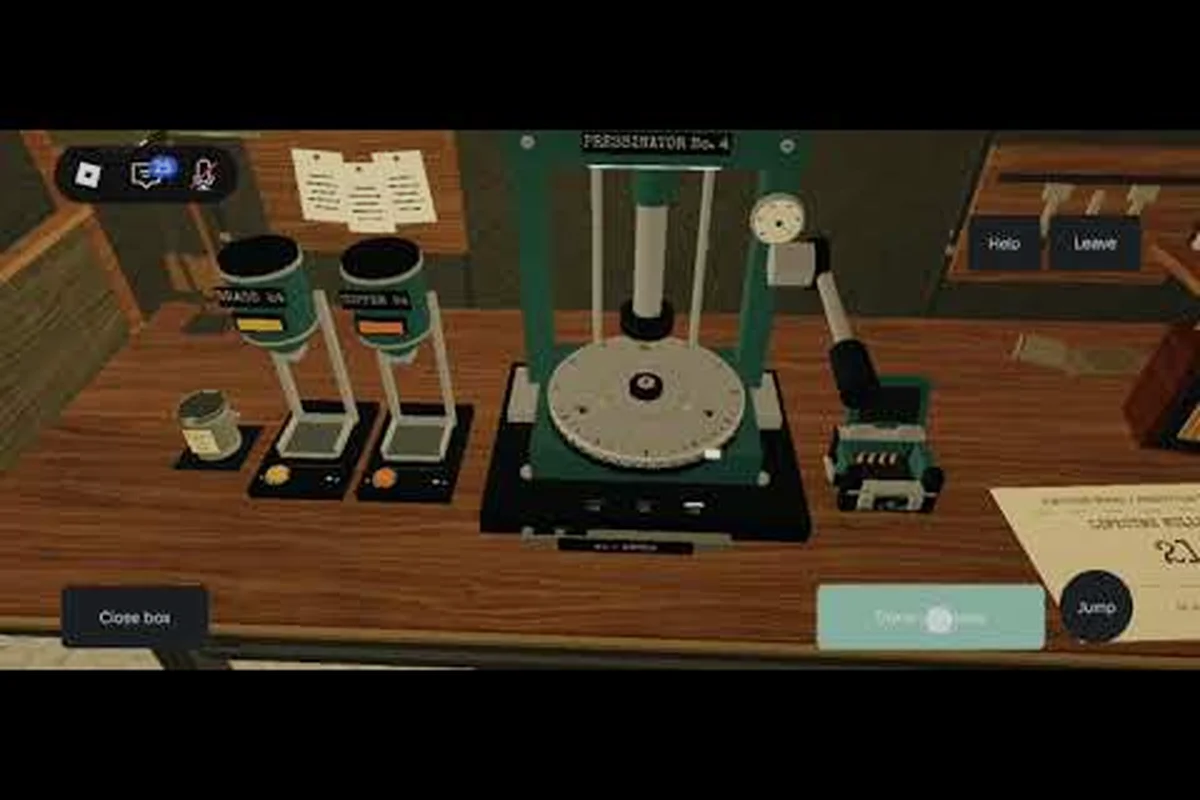
BRASS HELL co-op progression benefits from pooling workshop income into a coordinated production network, allowing players to specialize in resource extraction, component manufacturing, and distribution rather than building every stage independently. For example, one player can maintain the sawmill and farm while partners operate the assembly line and manage shipment routes, reducing duplicated construction and accelerating access to new recipes. By coordinating production timing and upgrade purchases, the team can turn the shared economy into earlier unlocks, greater production capacity, and more reliable progression than the slower expansion typical of solo play.
BRASS HELL Co-op Progression Starts With a Shared Production Plan
BRASS HELL co-op progression begins with treating the workshop as one economy instead of four independent stations. Players share money, materials, equipment, and production priorities, so the fastest team is usually the one that avoids duplicate work. One player can focus on a productive item while another prepares the next batch, and the remaining players keep the shipment line moving.
This approach matters because every unlocked recipe, station, or workshop upgrade can increase output, but only when the group converts that capacity into completed shipments. A cluttered workshop with attractive equipment but unfinished orders creates little momentum. A synchronized team, by contrast, turns each income event into a predictable reinvestment cycle.
The central BRASS HELL co-op strategy is therefore simple: assign a clear production owner, agree on the next shared upgrade, and keep money moving toward that objective. In practice, the team should reserve enough cash for the selected recipe or station upgrade before starting a less urgent job; otherwise, active production jobs may finish without generating the funds needed for progression. For example, if the group is targeting a faster assembly step, the owner can prioritize one batch while another player gathers inputs, then reinvest the resulting shipment income. This turns shared money, materials, and equipment into a coordinated production loop instead of four players competing for the same workshop resources.
| Shared priority | Player responsibility | Result to watch |
|---|---|---|
| Shipment preparation | Gather materials and package output | More completed orders |
| Production monitoring | Maintain active jobs and prevent bottlenecks | Less idle equipment |
| Upgrade planning | Track costs and sequence purchases | Faster permanent progression |
| Inventory organization | Keep inputs and finished goods separated | Fewer search delays |
Establish Roles Without Creating Idle Players
Flexible BRASS HELL co-op roles work best when every player has a primary responsibility and a secondary task. A role should describe what someone does during a normal production cycle, not force one player to control only a single machine forever. If that machine finishes early, the player should pick up the next shipment-support task instead of standing idle.
| Role | Main duty | Secondary duty |
|---|---|---|
| Producer | Keep recipes running | Collect completed goods |
| Supplier | Maintain material reserves | Load active stations |
| Shipment lead | Complete and sell orders | Reserve earnings |
| Upgrade planner | Track shared goals | Adjust priorities when funds allow |
Community experience suggests that explicit roles work better than improvisation once a team has enough upgrades to divide attention. The value of clear roles is not control for its own sake; it is instant handoff readiness when a station runs dry or a high-value shipment becomes available.
BRASS HELL Co-op Efficiency Comes From Shared Money and Timing
BRASS HELL co-op efficiency improves when the team agrees on how shared income will be spent. If every purchase requires an immediate vote, negotiations slow down. If one player spends freely, the group may purchase a useful upgrade at the wrong time. A simple rule works better: maintain a group fund for planned workshop purchases, while small consumables or routine costs can be approved through a quick message.
Good BRASS HELL co-op progression also depends on distinguishing temporary production gains from permanent workshop improvements. A temporary boost is useful for completing a difficult order immediately, while a permanent upgrade pays back over several production cycles. The best choice depends on the team’s cash reserve and current bottleneck.
| Purchase type | Best timing | Main benefit |
|---|---|---|
| Routine production input | When current reserves are low | Keeps recipes running |
| Temporary production boost | During an urgent shipment | Improves immediate output |
| Shared station upgrade | After one full build cycle | Increases future capacity |
| Major workshop upgrade | When normal income no longer clears goals | Changes long-term efficiency |
The best upgrade is not always the most expensive one. A team with limited cash may gain more from improving one repeatedly used station than from chasing a larger system. Players should compare cost, frequency of use, and whether the upgrade removes a recurring delay.
Build a Simple Funding Order
A productive funding order prevents the team from spending its entire balance on unrelated improvements. Start with essential operating inputs, add the upgrade that removes the largest production delay, save for a shipment opportunity, and only then consider long-term expansion. This four-part sequence creates a repeatable cycle.
-
Stabilize production: prevent active recipes from stopping for lack of inputs.
-
Remove one bottleneck: upgrade the station used most often.
-
Complete valuable shipments: reinvest the resulting income.
-
Expand shared capacity: purchase broader upgrades after the reserve is secure.
This sequence also explains BRASS HELL co-op vs solo from an economic perspective. Solo progression places every purchase, production task, and shipment decision on one player. Co-op can cover more steps simultaneously, but only if the group prevents duplicate purchases and idle time. More players do not automatically create more efficiency when responsibility remains vague.
For a closer look at how resource management affects progression outside a team, compare the solo progression planning guide with the shared funding order used in co-op. In solo play, every purchase competes directly with the player’s personal production chain: delaying a machine upgrade can stall recipes, while overfunding a shipment may leave the next input purchase unavailable. In co-op, the same cash can support parallel stations, but only when roles and spending priorities are explicit; otherwise, two players may buy overlapping upgrades while another production line lacks ingredients.
BRASS HELL Co-op Strategy Uses Production Waves Instead of Chaos
BRASS HELL co-op strategy becomes easier when production is divided into waves. Each wave has a beginning, a set of jobs, and a clear finish. One player starts the required stations, another collects and routes materials, and the shipment lead assembles the finished goods. No new production chain begins until the current wave reaches a stable checkpoint or the team has enough output for its next order.
This method reduces visual overload and keeps decisions understandable. Instead of asking what every player should do at once, the team asks what is needed to finish the current wave. Once that condition is met, the next wave can begin with roles already in motion.
| Production wave | Objective | Suggested owner | Exit condition |
|---|---|---|---|
| Preparation | Gather inputs and inspect stations | Supplier | Required materials secured |
| Assembly | Produce goods in sequence | Producer | Recipes complete |
| Collection | Move output toward shipment area | Collector | Finished goods ready |
| Dispatch | Package and sell completed order | Shipment lead | Income added to group fund |
| Reinvestment | Purchase next agreed upgrade | Planner | Next cycle has a new target |
Use Short Checkpoints
Long meetings between production waves are unnecessary. A checkpoint should answer only three questions: which target comes next, who owns the next task, and what must the group purchase. If all three are clear, production should resume without additional discussion.
Short checkpoints are especially useful when players have different schedules. Someone entering late can identify the current wave, finish the preparation role, and take over a defined task without needing a complete explanation of the session. That consistency supports replacement readiness, a useful quality when a regular player cannot continue.
Match Intensity to the Order
Not every shipment deserves the same effort. Routine orders should use a fast, low-interruption wave. High-value orders can justify gathering all available materials, but only if the team also has a clear finish line. Starting a complicated order without enough remaining inputs often creates more unfinished work and fewer completed sales.
The safest rule is to begin an order when the required inputs, production time, and shipping capacity are known. If any element is missing, the shipment lead can either wait, simplify the request, or change the wave target before time is spent.
BRASS HELL Co-op Roles Improve When Players Rotate Specialized Tasks
BRASS HELL co-op roles should evolve as the workshop unlocks more systems. During an early stage, flexible helpers are often more useful than specialists because each player must understand several basic tasks. Later, dedicated production, supply, and shipment roles can prevent confusion when more recipes and stations compete for attention.
Rotation also keeps BRASS HELL co-op fun from becoming repetitive. A player who always handles one task may lose the broader production rhythm, while a player who constantly changes jobs may lack confidence with the machines that matter most. A planned rotation gives everyone exposure without leaving the workshop uncovered.
| Progression stage | Role structure | Rotation style |
|---|---|---|
| Early workshop | Broad generalists | Switch after each wave |
| Establishing production | Mixed production and supply | Rotate every few waves |
| Expanded workshop | Clear specialists with backups | Rotate specialized tasks |
| Late production | Dedicated lanes plus flexible support | Rotate on fixed milestones |
Give Every Player a Backup
A backup prevents a delayed role from stopping the entire team. If the producer leaves, the supplier should know how to start and collect recipes. If the shipment lead is unavailable, another player should already understand packaging requirements. Backups do not require duplicate ownership; they require enough familiarity to act without a long explanation.
This structure makes BRASS HELL co-op roles more resilient during interrupted sessions. A short substitute can handle production support, while the remaining players retain their established lanes. The group can preserve momentum instead of rebuilding the entire plan around one missing participant.
Match Control Style to the Task
Some players prefer direct control of machinery, while others are comfortable with inspection and logistics. Assigning tasks by preference reduces idle time caused by poor fit. The player who enjoys operating equipment may still be the best shipment lead, however, if that person is unusually reliable under a deadline.
The goal is not to label players permanently. It is to choose the clearest division for the current session. For a workshop-centered reference, the workshop upgrade and round unlock list can help identify which stations become worth assigning dedicated owners later.
BRASS HELL Co-op vs Solo: Choose the Experience That Fits Your Session
BRASS HELL co-op vs solo is not simply a question of which mode advances faster. The best comparison depends on attention, communication, and the kind of production challenge the player wants. Co-op divides labor, but it also adds coordination. Solo provides total control, but every task competes for the same attention.
| Factor | Co-op | Solo |
|---|---|---|
| Production coverage | Several tasks can run in parallel | One player handles every task |
| Decision speed | Fast with established roles | Immediate, without group approval |
| Upgrade funding | Larger shared income | All spending depends on solo earnings |
| Mistakes | More handoff points | Fewer handoffs |
| Play style | Coordination and specialization | Personal scheduling and optimization |
Co-op is usually strongest when players enjoy dividing a system into roles and solving problems as a group. It can feel chaotic at first, but a shared funding order and fixed production waves reduce uncertainty. Solo is better for players who prefer uninterrupted control, careful experimentation, or short focused sessions without voice communication.
A mixed approach can also work. Players can use a group for the first portion of progression, accumulate funds, and then divide those funds between a shared upgrade and each player’s individual needs. This avoids forcing every purchase to benefit the entire workshop immediately.
Test Coordination Before Committing to a Heavy Investment
Before saving for a major upgrade, run several ordinary waves and record where delays occur. Does the team wait for materials, lose time collecting goods, or spend too long deciding what to produce? That delay points directly to the next role or process improvement.
The BRASS HELL end-game progression guide is useful for comparing late unlock priorities with those practical observations. The deciding factor is not the longest upgrade list, but the purchase that removes the group’s most frequent obstruction.
A BRASS HELL Co-op Progression Checklist for Every Session
A short session checklist helps a co-op team begin with the same information. Review the shared balance, identify unfinished orders, confirm the active production wave, and assign the next upgrade target. These four checks take less time than correcting a mismatched plan after several stations have already stalled.
| Session phase | Team check | Decision |
|---|---|---|
| Start | Shared funds and orders | Confirm the main target |
| Mid-wave | Supplies and active stations | Adjust assignments if needed |
| Before shipment | Finished goods and capacity | Package only what can ship |
| After income | New balance and bottleneck | Select the next upgrade |
| End | Output and remaining tasks | Save a clear handoff state |
Save a Handoff State
A handoff state tells the next group what remains: active recipes, collected goods, reserved money, and the selected upgrade. This is especially helpful when the team changes between sessions. Rather than repeat every decision, the next players can resume from a concise checkpoint.
A good handoff state should contain four facts: the current network and market position, the progress of active production chains, the team’s available cash and reserved funds, and the next upgrade chosen by the group. For example, a checkpoint might record that the team is two stages from completing a higher-tier goods chain, has reserved money for a specific upgrade, and has identified a shipping limit that affects the next production target. Recording these details makes BRASS HELL co-op progression easier to resume without repeating costly network planning, while also clarifying which decisions still need agreement between players.
-
The next order or production target
-
Which player owns each active task
-
The amount already reserved for the next upgrade
-
Any material or shipping constraints the team discovered
Over time, this checkpoint becomes a practical record of which BRASS HELL co-op strategy produces steady results, such as completing shorter production chains before expanding into higher-tier goods or balancing immediate cash against reserved upgrade funds. It also helps newer players enter a session without making the team restart its planning process. For example, the handoff can identify the next order, active task owners, available cash, reserved funds, and any shipping limit affecting production, giving the next group a clear starting point for coordinating network expansion and market timing.
Frequently Asked Questions
Is BRASS HELL co-op progression faster than solo play?
Not automatically. Co-op can progress faster when players divide production, shipping, and upgrade tasks without duplicating work. Solo play may feel faster when the player communicates instantly with no role handoffs. The better option depends on group coordination, available session length, and how quickly the team converts shared income into permanent upgrades.
What is the best BRASS HELL co-op strategy for beginners?
Begin with a simple funding order: stabilize production, improve the most-used station, complete valuable shipments, and then expand shared capacity. Assign one shipment lead, one supplier, and one or more producers, but let players switch tasks when a wave ends. Avoid expensive purchases until the group knows where production time is actually being lost.
How should players divide responsibilities in a four-player team?
Give three players clear primary duties—production, supplies, and shipments—and make the fourth player the flexible coordinator who covers shortages and advances the upgrade plan. The arrangement should still rotate after several waves so players do not become bored by one job. Every role needs a backup, especially when sessions end at different times.
Does BRASS HELL co-op efficiency depend on communication?
Yes, but it depends more on concise coordination than constant conversation. Players only need to announce wave changes, shortages, completed goods, and purchase decisions. A clear upgrade target and agreed handoff format can reduce communication while preserving efficiency, particularly in longer sessions where repeated updates become tiring.
What makes BRASS HELL co-op fun without sacrificing progress?
Rotate specialized duties, vary order complexity, and give players meaningful ownership of one part of the workshop. Fun comes from seeing a planned wave work, not from abandoning every objective. Short checkpoints, visible progress through shared upgrades, and fair task rotation create variety while keeping the team focused on completed shipments and lasting workshop improvements.