
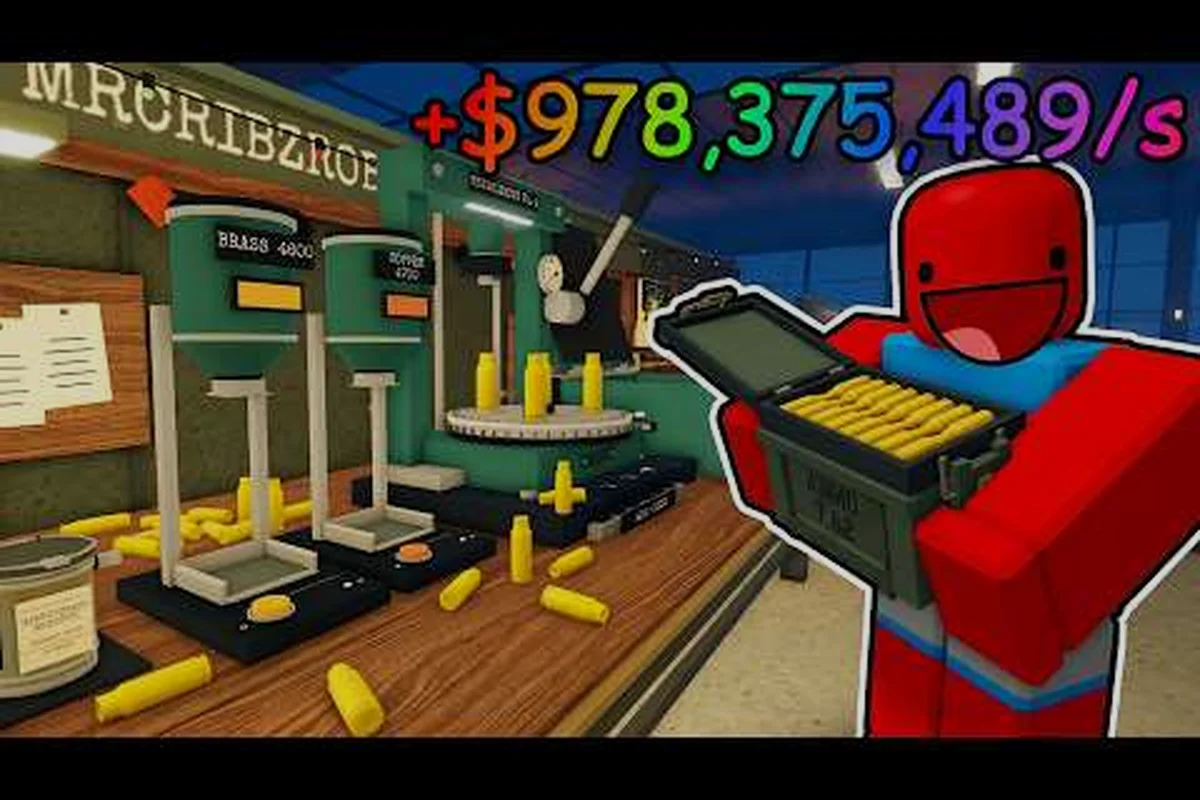
BRASS HELL team play succeeds when every player owns a clear station and communicates before production bottlenecks form. Divide press work, crate packing, delivery, and material handling among four players, then use shared upgrades in the right order to keep the factory moving.
BRASS HELL Team Play Starts With a Clean Role Split
BRASS HELL supports a shared factory floor for up to four players, so coordination matters more than everyone crowding around the same machine. The official BRASS HELL game page on Roblox identifies the experience as an early-access incremental factory simulator with shared progression. That means a completed production cycle can benefit the entire crew, but only if players prevent one station from falling behind.
A useful four-player BRASS HELL team play setup uses one person for each major production function. The exact assignment can change as the factory expands, but the responsibilities should remain distinct. Communication should focus on finished work, shortages, and upgrade decisions rather than constantly narrating every movement.
| Player role | Primary responsibility | Watch for | Best handoff |
|---|---|---|---|
| Press operator | Turns raw material into usable components | Empty input supply or delayed output | Completed batches and press status |
| Crate packer | Groups finished components into delivery units | Unpacked output and crate capacity | A full batch ready to move |
| Delivery runner | Moves crates to the destination and returns | Route congestion or an unfinished request | Delivered count and next destination |
| Materials scout | Supplies the press and replenishes storage | Low materials and competing upgrade costs | Material levels and purchase priorities |
This division keeps the team from repeating work. If all four players manufacture components but nobody packs crates, production stops even though the factory looks busy. If everyone packs but nobody delivers, inventory merely grows. A good role split measures output by completed deliveries rather than items touched along the way.
Start with ownership, not rigid timing
New crews often over-plan the opening minutes. BRASS HELL team play becomes smoother when each person understands a station well enough to cover a short absence. The packer should know how to operate the press, and the delivery runner should recognize when materials run low. This flexibility matters when someone is collecting supplies, handling an upgrade, or temporarily away from the keyboard.
Station ownership gives each player a clear production area to monitor, while cross-training prevents a single departure from stopping the entire factory. Establish the primary owner first, then assign one backup for every role: for example, keep the press operator as the packer’s backup, and let the delivery runner cover material restocking if the packer steps away. Because BRASS HELL’s factory work depends on continuous handoffs between pressing, packing, and delivery, practicing those backup assignments lets the crew absorb short absences without losing materials, output, or rhythm.
Agree on signals before the floor gets busy
Keep calls simple because production speed can make long explanations wasteful. Three signals cover most needs: “batch ready,” “materials low,” and “upgrade now.” A useful materials-low threshold is the point at which the scout should begin replenishing before the press stops, rather than waiting for the storage display to hit zero.
| Signal | Meaning | Expected response |
|---|---|---|
| Batch ready | A group of components is complete | Packer begins crate assembly |
| Materials low | The next press cycle may be interrupted | Scout checks supply and replenishes it |
| Delivery open | A crate is ready for transport | Runner takes priority over material errands |
| Upgrade now | A shared purchase has been agreed upon | Everyone pauses purchases until decided |
Signals should prevent repeated directions. For example, “delivery open” tells the runner to act immediately, while “materials low” gives the scout time to prepare. This arrangement reduces conflicting instructions and makes BRASS HELL team play easier for first-time collaborators.
BRASS HELL Split Work Guide for Four Busy Stations
A clean split begins with understanding what each station consumes and produces. The press operator transforms supplied materials, the packer converts loose output into crates, the delivery runner transports those crates, and the materials scout keeps production supplied. The sequence matters because optimizing a station without protecting the next one can reduce the factory’s actual throughput.
The press operator protects continuous production
The press is the central production point, so the operator should focus on input flow and output timing. Watch for idle gaps between crafts rather than focusing only on the number of completed items. A press that is technically active but repeatedly waiting for material is not delivering consistent output.
Use a simple handoff rule: report each completed batch as soon as it reaches the packing area. Avoid waiting until several batches accumulate unless the packer has explicitly asked for bulk handling. Bulk handoffs can reduce interruptions, but they also create a large temporary inventory that delays the next delivery.
Batch checkpointing means checking the press after every craft cycle, before starting the next long manual operation. For example, if the output is ready but the required input has not reached the press, stop and request the missing supplies instead of beginning another cycle. This catches shortages early, keeps the production line moving without unnecessary idle gaps, and prevents a failed cycle from wasting materials, time, and the next handoff.
The crate packer creates usable output
A packer converts an expanding pile of components into organized crates, which makes the next stage predictable. This player should watch both loose output and available crate capacity. Starting too early may consume open space; waiting too long can block the press area and delay further production.
The packer also serves as the team’s quality-control checkpoint. If a delivery request, crate type, or destination changes, the packer should confirm the destination before loading. Assuming that every crate follows the same route wastes time when the factory has multiple destinations.
Crate-capacity awareness means checking available storage before committing to a full batch. The crate packer should coordinate the press output with the delivery runner’s crate requirements, because filling every crate before a pickup leaves no buffer for the next production run. For example, if the team is assembling several brass components for one destination, reserve enough space for that batch instead of using the final crate for a partial set. This keeps finished materials organized, prevents congestion around the packing area, and gives the delivery runner a predictable pickup point.
The delivery runner prioritizes completed orders
The runner converts packed inventory into delivered output. This role should prioritize crates that are ready, because every finished but stationary crate represents work that has not reached its destination. Material errands are secondary when a completed delivery is waiting, unless the lack of materials will stop the press immediately.
Coordinate pickup and return routes to avoid crossing through active machine areas. Players who can see the whole floor can also prevent a simple traffic jam. The runner should report the delivered count after each trip, giving the crew an immediate measure of progress.
The materials scout prevents idle presses
The scout owns the supply side of the chain. This player should monitor both the press input and the team’s material reserves, then replenish before a shortage interrupts the operator. Early intervention is less disruptive than restarting an empty press and reconsidering a partially completed production run.
The scout also needs to coordinate with shared upgrade purchases. Spending personal or common currency on materials at the wrong moment can delay a purchase that benefits everyone. A practical rule is to compare the cost of the current material shortage with the value and timing of the next agreed upgrade.
| Priority | Reason | Action |
|---|---|---|
| 1 | The press is about to stop | Replenish materials immediately |
| 2 | A crate is ready to deliver | Keep the delivery route moving |
| 3 | A shared upgrade is affordable | Pause purchases and decide together |
| 4 | Supplies are comfortable | Prepare, organize, or improve the next station |
Use the BRASS HELL split work guide as a living plan
Assignments should not remain permanent simply because they worked during the first minute. If one station takes noticeably longer, redistribute one task rather than moving everything. For instance, the packer may combine components while the press operator also places finished work into a crate, allowing the runner to remain fully occupied. The goal is balance, not rigid titles.
A BRASS HELL split work guide is most effective when it tracks throughput. If deliveries occur less often than batches are created, packing or transport is the bottleneck. If materials arrive late, scouting needs priority. If the press waits while output remains on the floor, the team has too many operators and too few packers.
BRASS HELL Server Guide for Joining With Friends
Before entering the factory, make sure each player has access, a usable communication channel, and a basic idea of the current role split. A BRASS HELL server guide should cover both technical entry and coordination, because a working invitation does not guarantee that the group will understand the shared objective.
The official developer profile describes co-op for up to four players sharing the factory floor, so full crews should confirm their positions before beginning production. The broader BRASS HELL playing with friends guide provides additional room for discussing invitations, entry, and multiplayer setup, while this article focuses on dividing factory labor.
Complete the Roblox connection first
Players should enter Roblox with a stable internet connection, confirm that their account is signed in, and locate the BRASS HELL experience through its official game page. Because BRASS HELL is a Roblox game, the normal account and platform access requirements apply. If one player has trouble joining, checking the platform connection before blaming the server can save time.
Once inside the shared server, confirm that each teammate can see the same factory area and interact with its stations. A visible avatar alone does not always mean every player has control of the expected equipment, particularly during a busy production cycle.
BRASS HELL how to add friends stays simple
Roblox follows the player’s standard friend controls. Open the player list from the interface, use the friend-add control, enter or select the exact account, and send the request. The other player must accept before the friendship becomes active, and platform restrictions may delay the connection.
For a group using BRASS HELL how to add friends controls, compare usernames carefully because similar names and display names can cause confusion. Agree on one exact Roblox username in text before the session. This small step prevents invitations from reaching the wrong account.
| Connection problem | Likely check | Practical response |
|---|---|---|
| Friend request was not received | Exact username and friend settings | Send the request again and confirm the recipient’s Roblox username |
| Invitation does not open the expected server | Current server availability and platform access | Rejoin from the official game page and try the invite once more |
| Teammate appears but cannot interact | Busy station or setup timing | Move to a free station, then assign the intended role |
| Players enter different sessions | Join order and server timing | Have everyone use the same invite link |
Prepare a short pre-session plan
A useful pre-session message contains five items: the session objective, the proposed roles, the expected first upgrade, the signal system, and the fallback for an absent player. It does not need to be long. The objective may be completing a set number of deliveries, securing an upgrade, or establishing a steady production cycle.
Define “upgrade” before the first production round so every player knows whether it means buying the next factory-wide tier, improving a personal station, or funding a shared resource. For example, one player may call the next Factory Upgrade the goal while another expects a local station enhancement; agreeing on the target prevents conflicting spending and keeps the shared economy stable.
BRASS HELL Friends Help Guide for Better Coordination
Good communication is not limited to emergency calls. A useful BRASS HELL friends help guide keeps teammates aware of the production state, especially when one player is handling an upgrade or checking a distant supply area. Concise updates let the others react without stopping their own work.
Report states instead of instructions
“More copper” is less useful than “materials low; press has one cycle remaining.” The second report tells the press operator whether to continue and gives the scout time to react. Likewise, “crate ready” tells the runner what to collect, while “delivery open” gives that pickup priority over a nonurgent supply trip.
| Weak update | Better update | Information conveyed |
|---|---|---|
| “Need help” | “Press needs materials; one cycle left” | Identifies the problem and urgency |
| “I finished” | “Three components in the pack zone” | Shows progress and expected handoff |
| “Come do this” | “Runner free; crate ready for delivery” | Directs the available teammate |
| “Wait” | “Pausing purchases for upgrade vote” | Clarifies the reason for the pause |
Keep conversations task-focused
Friendly conversation has its place, but production calls should remain short. Use voice chat for immediate movement, text for status updates, and gestures or labels for repeated instructions. Choose one primary method for urgent calls so two simultaneous messages do not create confusion.
For groups with different schedules or communication preferences, the cooperative guide can help frame smaller sessions and adaptable roles. The key is to preserve the same core handoffs even when only two or three people are present.
Review the crew after each objective
After completing a target, ask three brief questions. Did one player spend most of the session waiting? Did the team create materials that never became deliveries? Did everyone understand the upgrade decision? These questions reveal problems while the experience is still fresh.
A short review can lead to several practical adjustments after each objective. For example, if one player repeatedly waits for components while another is still packing, the crew can redistribute the workload before the next wave; if a specific upgrade is repeatedly misunderstood, clarify the goal, cost, and production benefit while the team’s shared context is fresh. Tracking these patterns over several objectives helps distinguish a one-time routing problem from a persistent bottleneck, making BRASS HELL team play more efficient without interrupting the production rhythm.
-
Swap roles when the packer spends more time waiting than packing.
-
Give the delivery runner priority during high-output periods.
-
Assign the materials scout to watch two stations when supplies are abundant.
-
Rotate the upgrade decision so one player does not control all spending.
-
Practice a backup role before someone must leave.
A BRASS HELL friends help guide should also account for social friction. If two players choose different tasks, the others should not duplicate their work. One person can resolve the conflict by stating who is already handling the task, then offering a complementary action that advances production.
BRASS HELL Team Play Upgrade Order and Bottleneck Control
Shared progression makes upgrade timing a group decision. The official game page notes that progress benefits the whole crew, which means an upgrade purchased for one station can affect every player’s workflow. Before buying, identify the current constraint instead of choosing the most visually exciting machine.
Identify the true constraint
A bottleneck is the station that limits completed deliveries. It may not be the station receiving the most attention. If the press creates components faster than they can be packed, press upgrades may increase inventory without increasing output. If packing is quick but delivery is slow, transport improvements or a second runner may deliver more value.
Use a simple observation window. Count completed components, completed crates, and successful deliveries over the same period. The stage with the smallest output relative to the others is usually the constraint, but visible congestion is stronger evidence than raw counts alone.
| Factory state | Likely constraint | Better upgrade target |
|---|---|---|
| Press idle, materials present | Packing or delivery | Faster downstream handling |
| Materials absent, press ready | Supply collection | Material capacity or replenishment |
| Components wait for packing | Crate packing | Packing speed or organization |
| Crates wait for transport | Delivery route | Delivery capacity or mobility |
| Every station moves regularly | No immediate bottleneck | Shared upgrade with broad benefit |
Make one upgrade decision at a time
When several players can purchase something, announce the option and expected benefit before spending. A one-at-a-time purchase rule prevents two players from selecting different upgrades within moments of each other. If the first purchase changes the factory’s bottleneck, the second decision should wait until the crew observes the result.
This approach is especially valuable in the shared-upgrade economy because a rushed choice can consume resources that would have solved the immediate shortage. Keep a simple ledger of the last purchase, its intended effect, and the next target to watch.
Prevent accidental upgrade spending
Some upgrades may be easy to purchase while moving through a busy area. Players should avoid opening purchase menus unless the group has discussed the option. The materials scout can announce whether the purchase would consume the funds needed for an immediate restock.
Upgrade pause discipline means no one buys during active production until the intended choice is confirmed. Once the purchase is made, the team should assign one player to watch the affected station rather than assuming the upgrade solved the broader problem: a new device may increase output but also alter movement space, crowding, or staff priorities, so a quick check can reveal whether the team needs to redistribute work or adjust the upgrade order.
Adapt the role split after each upgrade
A successful upgrade may make one job too fast for the current structure. For example, improved press output can leave the packer behind, while faster deliveries may reduce the runner’s workload and make another role useful. Recheck the handoffs after each major purchase.
Do not change every role at once. Adjust the single stage that became overworked, give the new arrangement one production window, and then evaluate the result. This controlled response keeps the BRASS HELL team play system understandable and prevents one upgrade from triggering constant confusion.
BRASS HELL Team Play Practice Scenarios and Session Goals
Strong coordination is easier to recognize when the crew agrees on a measurable objective. A short session target creates focus without requiring every player to understand every station at once. The objective should reward a complete production chain rather than isolated actions.
Start with a delivery challenge
Ask the team to complete a set number of deliveries within a chosen period. The exact target can vary, so use the first delivery as a baseline and improve from there. The packer, press operator, runner, and scout must each support the same chain for the count to rise.
| Scenario | Success condition | Likely adjustment |
|---|---|---|
| Short delivery challenge | Complete the agreed delivery count | Support the stage with the longest wait |
| Four-player workshop | Keep all four stations active | Rotate backup tasks when one role becomes light |
| Two-player session | Complete deliveries with fewer workers | Combine scouting and pressing tasks |
| Upgrade-focused session | Save toward one agreed purchase | Delay all unrelated spending |
| Long factory session | Sustain production across several cycles | Recheck roles after every major upgrade |
A baseline delivery count is more useful than claiming one team can make a fixed number of crates per minute. Player speed, available upgrades, and current production demands can change the result. Record your own first run, then use that as the comparison point.
Practice the handoff under pressure
Run a scenario where the press produces several batches quickly. The packer should communicate when the first batch is ready, and the runner should pick it up before later components pile up. This exercise reveals whether the crew can recognize a bottleneck before it becomes obvious.
Next, pause one station briefly and activate its backup. If the press operator must cover packing, the runner can take over a small material task. The goal is not perfect substitution; it is preventing the entire factory from stopping because one person was unavailable.
Debrief using completed output
At the end of the session, compare the three measurements used earlier: components, crates, and deliveries. If crates consistently trail components, the team needs more packing capacity. If deliveries trail crates, the runner or destination needs attention. If components trail crates, the press or material supply is the limiting factor.
The BRASS HELL best way to play with friends companion focuses on multiplayer priorities, but the measurement method remains the same: evaluate completed work at the end of the shared cycle. Use the numbers to make the next session cleaner, not to assign blame.
Prepare for a changing crew size
A four-player role plan should still work when someone leaves. The delivery runner and materials scout are the easiest functions to combine because both support production rather than directly transforming components. The press operator and packer should remain separate whenever possible because both sit in the middle of the chain.
When only one player is available, focus on completing short, realistic cycles instead of trying to maintain every station independently. When two players return, divide the work at the handoff boundary so each person stays on one side of the production chain longer.
BRASS HELL Server Guide Checklist for the First Session
A structured first session prevents the team from spending its opening minutes deciding what to do. The factory may be active as soon as everyone enters, but a thirty-second plan can prevent duplicated production and conflicting purchases. Use the checklist below as a practical BRASS HELL server guide for each new crew.
Before production begins
Before the first production run, confirm that every intended player is actually present, then walk the factory floor and map each station to one primary owner. Choose three clear signals—such as material arrival, batch completion, and finished-crate dispatch—and make sure the crew knows who handles supplies, packing, and delivery. If the team is small, give each player a secondary responsibility without creating overlapping authority; for example, the press operator can also verify batch labels before the crate reaches the delivery area. This prevents a delayed material call from leaving one station idle while another player works on the wrong shipment.
| Check | Ready result |
|---|---|
| Attendance | Every intended player has entered |
| Roles | Press, packing, delivery, and supply are assigned |
| Signals | All players know the material and batch calls |
| Upgrades | Everyone agrees to pause before spending |
| Baseline | The crew knows its current delivery rate |
During the first production window
Watch the handoffs rather than individual craft counts. If the press operator finishes work but the packer never receives the message, fix the communication gap. If a crate remains ready while the runner collects materials, set priorities for the next cycle.
After the first delivery target
After the first delivery target, pause purchases long enough to compare completed deliveries with each workstation’s assigned workload. If one station repeatedly delays handoffs, redistribute a specific task instead of rebuilding the entire plan. For example, if the client is ready but a neighbor’s order remains incomplete, assign the blocked player to finish that order first. Record the adjusted role, then watch whether completed deliveries rise during the next window; this keeps the team’s division of labor responsive without disrupting the broader BRASS HELL server workflow.
The final check is repeatability. A coordinated team should be able to explain its current split, identify its constraint, and adjust it without confusion. That ability is the foundation of effective BRASS HELL team play: every station has an owner, every handoff has a message, and every upgrade is measured by the work it helps the crew complete.
Frequently Asked Questions
How many players can join BRASS HELL?
BRASS HELL supports up to four players sharing one factory, according to the official Roblox listing. Four players can divide press operation, crate packing, delivery, and material handling. Smaller groups can still use the same handoff system by combining support roles, especially supply and delivery.
What is the best way to divide work in BRASS HELL?
The best division gives one player primary responsibility for the press, one for packing crates, one for delivering completed orders, and one for replenishing materials. If fewer players are online, combine material handling with another job and prioritize keeping the press and packing stages supplied.
How can I add friends and invite someone to BRASS HELL?
Use Roblox’s normal friend controls to send and accept friend requests, then enter the official BRASS HELL game page and use the platform invitation option. Confirm exact usernames before inviting because similarly spelled display names can cause confusion. If a direct invite fails, have everyone rejoin through the official page.
Who should buy upgrades during team play?
The crew should agree on upgrades before anyone spends shared resources. Identify the current bottleneck, announce the proposed purchase and its expected benefit, and allow only one purchase decision at a time. After buying, watch the affected station to confirm whether the upgrade improved completed deliveries.
What should a two-player BRASS HELL team focus on?
Two players should focus on completing the production chain rather than maintaining every station equally. One can handle the press and supply preparation while the other packs and delivers, or they can divide by production stage. Keep materials available, deliver packed batches promptly, and record completed deliveries to improve the next run.