
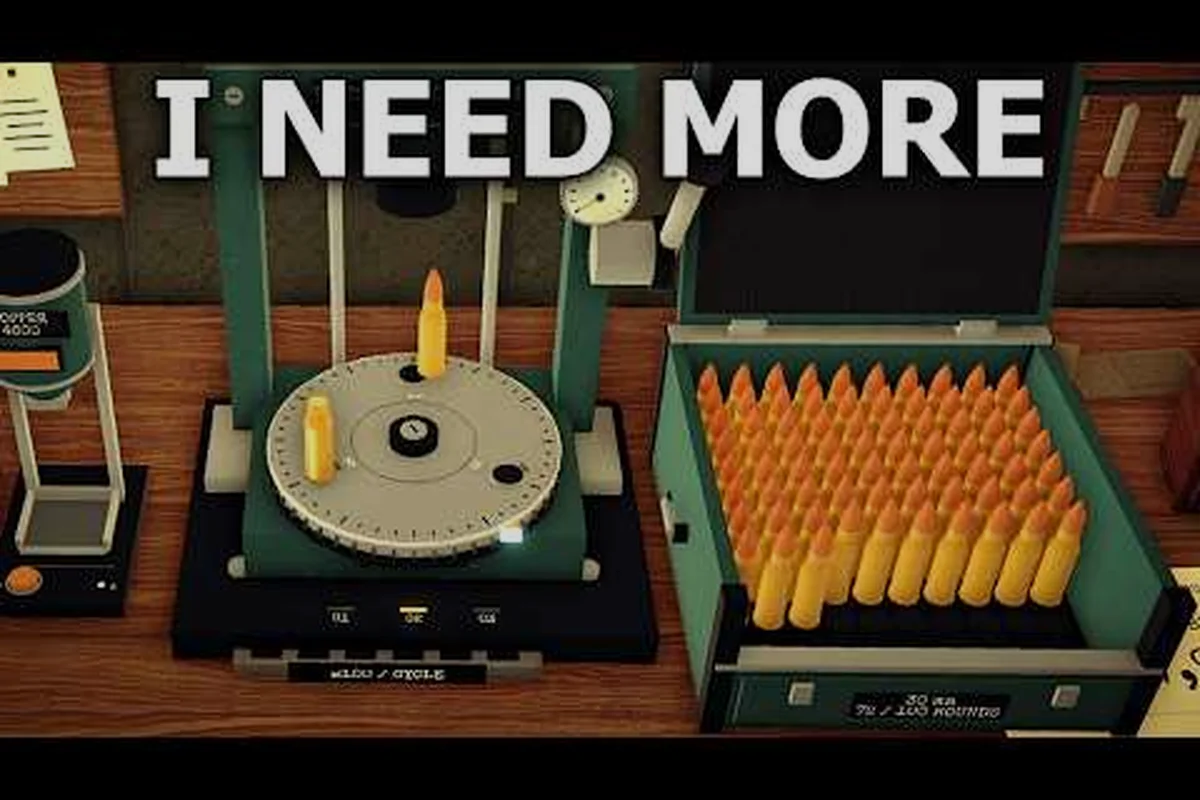
BRASS HELL is an early-access incremental factory sim where up to four players share one factory floor, and a clear BRASS HELL roles guide is the fastest way to stop everyone crowding the same station. Assigning who does what turns a chaotic lobby into a line that never idles.
Why Role Assignment Decides Your Factory Speed
The official Roblox game page advertises sharing the factory floor with up to four players for full-speed production, and that phrasing is the whole design philosophy in one line. Every station in the loop — pressing rounds, packing crates, hauling materials, running deliveries — sits idle the moment nobody is standing at it. When four players all hammer the press, crates pile up unbuilt and the delivery queue starves.
A clean four-role split solves that by keeping every station active at once. The developer's own profile describes the same structure: press operator, crate packer, delivery runner, and materials scout. That is not a rigid class system with locked abilities — it is a coordination agreement your crew makes before the shift starts.
Here is why the split matters more in BRASS HELL than in a typical co-op builder: the four stations sit on a single shared loop, so one idle post doesn't just slow itself down — it drains the whole line. Leave the materials scout slot empty and the press operator runs dry mid-batch; skip the delivery runner and finished crates rot in the queue while the packer has nothing to load. In a standard co-op builder, players usually share one resource pool and can cover each other's gaps; in BRASS HELL, each role owns a distinct hand-off point, so a missing link breaks the chain instead of merely softening it.
-
Manual crafting is the core loop, so human hands at each station are the actual throughput limit — a community gameplay video from Tryhard_Playz shows players hand-building large quantities of rounds on the press, which is exactly the bottleneck roles are meant to relieve.
-
Stations compete for attention, and the official page notes that simple callouts about crate readiness and delivery timing keep the line from stalling.
-
The game is incremental, so small early inefficiencies compound into hours of lost progress later.
Before you assign a single station, get the lobby itself sorted: the 4-player guide walks through inviting friends and joining a shared server, which matters here because BRASS HELL's four-role split only pays off once all four slots are actually filled — a three-player crew leaves one hand-off point unmanned, and as the loop above shows, that single gap starves the press or strands finished crates in the delivery queue. Sort the invite and server join first, then agree on who takes press operator, crate packer, delivery runner, and materials scout before the shift clock starts.
The Four Stations That Need a Body
Think of the factory as four jobs that must all be filled simultaneously. Press work converts raw material into finished rounds. Crate packing turns loose output into shippable units. Scouting keeps the material buffer from running dry. Deliveries convert finished crates into the currency that funds upgrades. Skip any one and the other three throttle.
BRASS HELL Who Does What: The Four-Role Breakdown
This is the heart of any BRASS HELL coordination guide: matching each player to a station based on temperament and reaction speed rather than random assignment. The table below maps each role to its station, its main output, and the failure mode you see when it goes unfilled.
| Role | Primary Station | Main Output | What Breaks Without It |
|---|---|---|---|
| Press Operator | Ammunition press | Finished rounds | Crates have nothing to pack |
| Crate Packer | Packing bench | Sealed crates | Deliveries have nothing to ship |
| Materials Scout | Resource nodes / buffer | Raw material stock | Press runs dry mid-shift |
| Delivery Runner | Shipping dock | Currency and unlocks | Upgrades stall completely |
Press Operator: The Throughput Anchor
The press operator is the player who never really leaves the machine. Because rounds are hand-built in large quantities, this role rewards patience and rhythm over speed — the goal is a steady stream, not a burst followed by a stall. A good press operator watches the packer's crate count and slows down when the bench backs up, which prevents wasted material sitting in loose piles.
Crate Packer: The Buffer Manager
The packer converts loose rounds into sealed crates and effectively acts as the factory's shock absorber. When the press surges, the packer absorbs the overflow; when the press stalls, the packer drains the backlog. This role suits a player who likes watching two numbers at once and calling out readiness, since crate readiness is one of the two callouts the official page specifically flags as stall-prevention.
Materials Scout: The Quiet Carry
Scouting looks passive and is anything but. The scout keeps raw material flowing so the press never idles, and in a four-player crew the scout is often the difference between a smooth shift and constant interruptions. Rotate a restless player into this role rather than a patient one — scouting involves more movement and less standing still.
Delivery Runner: The Economy Engine
The runner turns crates into currency, and currency turns into upgrades. Because BRASS HELL is incremental, the runner's timing directly controls how fast the whole crew unlocks the next tier of equipment. Delivery timing is the second callout the official page recommends, and it is the runner's job to announce departures so nobody is surprised by an empty dock.
BRASS HELL Coordination Guide: Callouts and Rotation
A BRASS HELL coordination guide is only useful if it survives contact with a real shift, and that means a tiny callout vocabulary plus a rotation plan. Keep it to two or three phrases so nobody has to think about what a shout means.
| Callout | Who Says It | Meaning | Expected Response |
|---|---|---|---|
| "Bench full" | Crate Packer | Packing backlog is growing | Press operator slows or pauses |
| "Dock ready" | Delivery Runner | Crates loaded, leaving now | Packer prioritizes next batch |
| "Stock low" | Materials Scout | Raw material nearly gone | Press operator throttles down |
| "Press clear" | Press Operator | No loose rounds waiting | Packer switches to packing |
Rotating Roles Without Losing Tempo
Long shifts cause fatigue, and a tired press operator makes mistakes that cascade. Rotate on a fixed interval — every few upgrade tiers is a natural checkpoint — and rotate in pairs so two stations swap at once rather than one player wandering off. The best way to play with friends covers session pacing in more depth if your crew tends to burn out early.
Handling a Three-Player or Duo Session
Not every lobby fills to four. With three players, merge scouting into the delivery runner's job and accept a slightly slower material feed. With two, the strongest pairing is press operator plus a hybrid packer-runner, because the press must never stop and the economy must never fully stall. The share the factory breakdown covers smaller crew sizes and server limits.
BRASS HELL Social Gameplay: Making the Multiplayer Experience Work
BRASS HELL social gameplay is unusual for a factory sim because there is no combat pressure forcing conversation — the social layer is entirely built from coordination. That is a strength if your crew talks and a trap if it does not. Silent lobbies drift into everyone pressing the same button, and output collapses without anyone noticing why.
The BRASS HELL multiplayer experience rewards crews that treat the shift like a short briefing. Before the first crate ships, agree on three things: who owns which station, what the callouts mean, and when the first rotation happens. That five-minute conversation typically saves far more time than it costs.
A few practical habits keep a shared factory healthy across a full shift: name a single caller per station so overlapping voice chat cannot bury a critical callout, and announce any press-tier upgrade before the purchase lands, because it instantly changes the packer's workload and can strand a half-filled queue. Let the scout choose the route since they read the material map most often, and hold back a small crate reserve so one missed delivery never stalls the whole line. Rotating these duties every few shifts also spreads familiarity with each BRASS HELL role, so no station depends on one player's memory.
-
Assign one caller per station so overlapping voices do not cancel out the important message.
-
Announce upgrades before buying them, since a new press tier changes the packer's workload instantly.
-
Let the scout pick the route — they see the material map most often and know which nodes are worth the trip.
-
Bank a small crate reserve so a single missed delivery never halts the whole line.
Watching Real Runs Before You Commit
The most efficient way to learn station rhythm is to watch a crew that already has it. The Tryhard_PlayzGames channel hosts BRASS HELL community gameplay, and a single press-and-crate run will show you the tempo far faster than reading about it. Pay attention to how often the press operator pauses and how the packer signals readiness — those micro-patterns are the actual skill.
BRASS HELL Play Online: Session Setup and Etiquette
Learning to BRASS HELL play online smoothly starts before the lobby loads. Confirm everyone is on the same version, since early-access builds update frequently and a mismatch can drop players mid-shift. The official BRASS HELL page on Roblox is the source of truth for the current build and the four-player cap.
Session etiquette matters more than most crews expect. A player who leaves mid-shift strands a station, and the remaining three have to absorb the gap. Agree on a rough session length up front, and if someone must go, have them announce it so the nearest player can cover their station before output drops.
| Session Length | Recommended Rotation | Best Fit |
|---|---|---|
| Under 30 minutes | No rotation, fixed roles | Quick upgrade push |
| 30-60 minutes | One swap at midpoint | Standard crew session |
| 60+ minutes | Swap every major upgrade | Long progression grind |
When to Bring in a Fourth Player
A fourth player is not always an upgrade. If your three-player crew already covers press, packing, and a hybrid scout-runner, adding a fourth only helps when the delivery queue is genuinely backed up. Watch the dock: if crates sit waiting for more than a few seconds, a dedicated runner earns their slot immediately.
Frequently Asked Questions
What is the best role for a new player in BRASS HELL?
Crate packing is the friendliest starting role because it teaches the output flow without demanding perfect press rhythm. A new player can watch crate counts, learn the callouts, and see how the whole line connects before taking on the press or the delivery economy.
How many players can share one factory?
The official game page advertises up to four players sharing a single factory floor for full-speed production. Smaller crews still work, but they must merge roles — typically folding scouting into deliveries — and accept a slower material feed as the tradeoff.
Do roles lock you out of other stations?
No. Roles are a coordination agreement, not a class system, so any player can step to any station at any time. The split exists purely to keep all four stations staffed, and crews should rotate freely whenever fatigue or an upgrade changes the workload.
What should I do if my crew keeps stalling?
Start with the two official callouts: crate readiness ("bench full" / "bench empty") and delivery timing ("dock ready" / "dock clear"). Most stalls are silence problems, not role problems — a packer who never announces a full bench leaves the press operator guessing, and a runner who never confirms the dock is clear lets finished crates pile up at the loading point. A single shout usually restores flow within one shift, so agree on these two phrases before the first press cycle starts.
Is BRASS HELL better solo or with a full crew?
A full crew produces faster because every station stays active, but solo play is viable for learning the loop. Once you understand the press-to-crate-to-delivery chain, a coordinated four-player crew will outpace a solo run by a wide margin.
Assigning roles is the single highest-leverage decision a BRASS HELL crew makes, because the factory only runs as fast as its slowest empty station. Lock in a press operator, a packer, a scout, and a runner, agree on two callouts, and rotate before fatigue sets in — that structure turns four separate players into one production line.